 Book
BookBook · L2 · Inner Atlas Reviewed
The Logic of Faith
Elizabeth Mattis Namgyel
A Buddhist account of faith as a way of meeting uncertainty and interdependence, rather than a demand for unquestioning belief.
BuddhistModerate
COMPLETE BIBLIOGRAPHY · 70 BOOKS
A complete view for those who want to browse every book. If this feels too much, choose just one path instead.
Can I still have faith, but differently?
Faith can survive a change in its institutions. Buddhist, Muslim, pluralist, and Christian writers explore trust and practice without asking every traveler to return to the same home.
BookElizabeth Mattis Namgyel
A Buddhist account of faith as a way of meeting uncertainty and interdependence, rather than a demand for unquestioning belief.
 Book
BookRichard Rohr
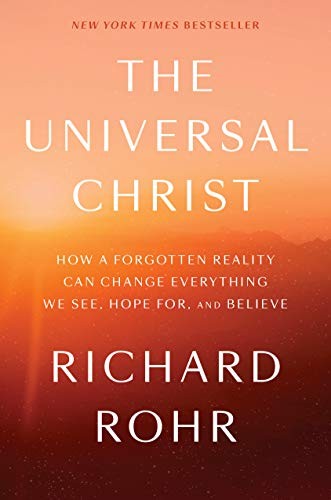
Richard Rohr distinguishes Jesus of Nazareth from ‘Christ’ as the eternal divine presence disclosed through creation, history, and every creature. Drawing on Christian Scripture, Franciscan spirituality, contemplation, incarnation, and nondual language, he proposes that Christ is not God's limited appearance in one place but the pattern of divine presence made visible in Jesus and present throughout reality.
BookDanté Stewart
Literary memoir and meditation tracing Black Pentecostal roots, white evangelical leadership, anti-Blackness, rupture, Jesus, Blackness, belonging, and spiritual reclamation.
BookStephen Batchelor
Short reflections on Buddhist doubt and the possibility that uncertainty can deepen practice.
BookEboo Patel
Patel recounts growing into Muslim faith and interfaith leadership, arguing for constructive relationships across religious differences.
BookDuane Bidwell
Explores the lived experience of people whose religious belonging or practice crosses tradition boundaries.
 Book
BookDiana Butler Bass
Diana Butler Bass traces a movement from imagining God primarily as a distant being ‘above’ the world toward encountering divine presence through ground, water, sky, home, neighborhood, and shared life. Blending history, reporting, memoir, and constructive theology, she interprets declining institutional affiliation alongside the growth of immanent, ecological, and place-rooted spiritual experience.
 Book
BookBrian D. McLaren
Brian McLaren describes doubt as a possible passage through changing forms of faith rather than the simple loss of belief. Using a four-stage framework—simplicity, complexity, perplexity, and harmony—alongside personal stories, he explores how inherited certainty can fail, why deconstruction can feel lonely, and what a more flexible, compassionate, justice-oriented faith might become afterward.
How do I build a meaningful life without religion?
A meaningful life can draw on relationships, ethics, ritual, curiosity, and shared work without a religious framework. These authors offer distinct secular and humanist ways to live.
 Book
BookAlice Roberts & Andrew Copson
Roberts and Copson assemble more than two thousand years of humanist thought through short essays, stories, quotations, meditations, and illustrations. The book moves from human origins and the rejection of religious explanations toward questions of clear thinking, ethical life, happiness, loss, and meaning grounded in reason, shared humanity, and the one life we know we have.
BookSasha Sagan
A memoir and practical exploration of celebrating seasons, births, loss, and family life without supernatural belief.
 Book
BookRonald Aronson
Philosopher Ronald Aronson asks how atheists, agnostics, secularists, and the undecided might construct shared meaning after religion rather than defining themselves chiefly through opposition to belief. He explores morality, community, gratitude, hope, responsibility, dependence on others, and humanity's place in nature as resources for a coherent secular orientation.
BookChris Stedman
A humanist’s account of engaging religious people respectfully while remaining openly atheist.
BookAnthony B. Pinn
Examines Black nonbelief through its histories, principles, community practices, and ways of making meaning.
 Book
BookSean Carroll
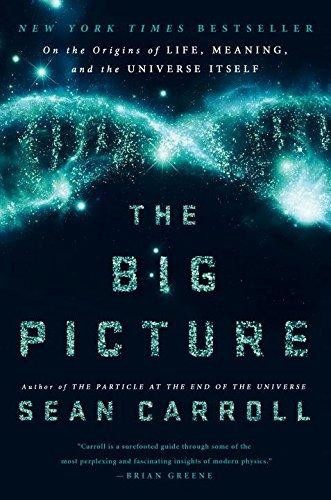
Physicist Sean Carroll moves from quantum fields, cosmology, and emergence to life, consciousness, morality, and meaning. He calls his framework ‘poetic naturalism’: there is one natural world, but multiple vocabularies can truthfully describe its higher-level patterns. The book argues that purpose and value can be constructed and real for human beings without being written into the universe by a supernatural source.
BookPhil Zuckerman
Draws on interviews and sociological research to describe ethics, community, and purpose among nonreligious people.
 Book
BookSarah Bakewell
A lively history of Humanist efforts to build meaning, ethics, freedom, and solidarity around human life rather than revelation.
Where might I belong now?
Belonging may need to be remade after an inherited community changes or falls away. Begin with friendship, gathering, chosen relationships, mutual care, and the inner work of belonging.
 Book
BookVivek H. Murthy
Physician and former U.S. Surgeon General Vivek Murthy connects loneliness and social disconnection with physical health, mental health, workplaces, families, and civic fragmentation. Drawing on research, public-health experience, and stories, he explores attention, service, relationships, community design, and the conditions that help connection grow.
BookKat Vellos
A hands-on guide to making and sustaining adult friendships, with prompts and activities that can be tried locally.
 Book
BookPriya Parker
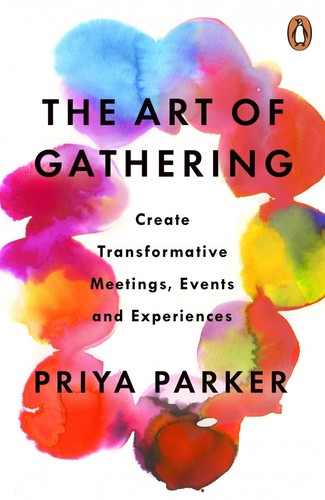
Facilitator Priya Parker argues that meaningful gatherings begin with a specific purpose and require intentional choices about invitation, boundaries, authority, conflict, beginnings, and endings. Through examples from meals, meetings, conferences, and civic life, she challenges hosts to stop relying on convention and design around what people are actually gathering to do.
 Book
BookRhaina Cohen
Reported stories of people who organize life around committed friendships outside the usual hierarchy of romance, marriage, and family.
 Book
BookDale McGowan
Dale McGowan explores marriages and families in which one partner is religious and the other is not. Drawing on surveys, interviews, and practical examples, he examines respect, identity, rituals, holidays, church participation, extended family, conflict, and raising children without requiring either partner to convert or conceal conviction.
 Book
BookJessica Wilbanks
Memoir of Pentecostal childhood, tongues, loss of belief, family and class tensions, research in Nigeria, and later family reconciliation.
 Book
BookDean Spade
Organizer and legal scholar Dean Spade presents mutual aid as collective work in which people meet immediate needs while building relationships, political understanding, and the capacity to change the conditions producing those needs. Drawing on abolitionist, disaster-response, queer and trans organizing, he distinguishes participatory solidarity from charity models organized around deservingness, donor control, saviorism, professionalization, or institutional image.
 Book
BookToko-pa Turner
Turner draws on memoir, dreamwork, myth, and depth psychology to consider estrangement and the patient work of belonging to oneself and others.
How can I recover a sense of wonder?
Wonder can be found in a nearby bird, another person’s joy, the living earth, and the breadth of the cosmos. These books invite attention without requiring one explanation for what it means.
 Book
BookRoss Gay
Brief essays attend to small delights in gardens, friendship, strangers, and daily life while leaving room for grief and injustice.
BookAimee Nezhukumatathil
Illustrated essays that join natural history, memory, identity, and delight in living creatures.
 Book
BookDalai Lama XIV; Desmond Tutu; Douglas Abrams
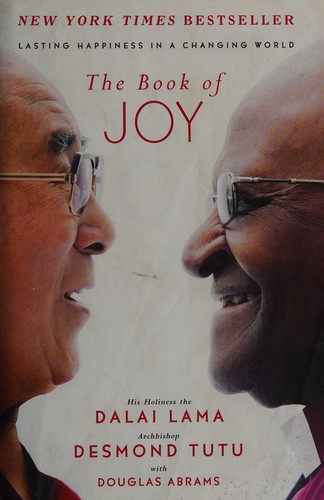
The Dalai Lama and Desmond Tutu discuss joy, suffering, compassion, humor, and practice across Buddhist and Christian lives.
BookAmy Tan
Drawings and journal-like accounts of birds near Tan’s home show what sustained attention can reveal in ordinary surroundings.
 Book
BookRobin Wall Kimmerer
Robin Wall Kimmerer braids botanical science, Citizen Potawatomi teachings, memoir, plant stories, and reflections on language, gratitude, reciprocity, gift, and responsibility. Rather than treating plants as passive resources, she invites readers to encounter them as teachers and relatives within living systems of exchange, while tracing the damage caused by extraction and settler colonialism.
BookSarafina El-Badry Nance
An astrophysicist’s memoir interweaves the study of the cosmos with her life and the struggle to make a place in science.
BookHakeem Oluseyi; Nils Johnson-Shelton
An astrophysicist guides readers through the physical history and conditions that made our existence possible.
 Book
BookAbraham Joshua Heschel
Heschel considers wonder, the ineffable, divine concern, and human response within Jewish religious philosophy.
 Book
BookWilliam James
William James's Gifford Lectures examine conversion, mysticism, saintliness, divided selves, melancholy, prayer, and the practical fruits of belief through historical accounts and psychological reflection. He deliberately emphasizes individual experience over institutions and asks what religious states do in a person's life rather than deciding their supernatural source.
What could I practice, rather than merely believe?
These books invite a more attentive relationship with the mind, body, and inner life. Their approaches have different aims and depths, offering ways to explore through lived experience.
 Book
BookThich Nhat Hanh
Written from letters Thich Nhat Hanh sent to a peace-worker community during the Vietnam War, this compact book teaches mindfulness within ordinary activity: washing dishes, breathing, walking, resting, and attending to the body. Stories, explanations, sutra material, and thirty-two exercises present awareness not as withdrawal from life but as the ground for presence, compassion, and engaged action.
 Book
BookTara Brach
Psychologist and Buddhist teacher Tara Brach combines meditation instruction, therapeutic language, stories, and guided reflection to address the ‘trance of unworthiness’—the shame, fear, and self-rejection that make people feel fundamentally deficient. Radical acceptance joins clear recognition of present experience with compassion, aiming not at passive resignation but at a freer response to pain, relationship, and life.
 Book
BookBhante Henepola Gunaratana
Bhante Henepola Gunaratana gives detailed instruction in Theravada Vipassana meditation, explaining posture, breath attention, concentration, mindfulness, common distractions, and the relationship between practice and Buddhist ethics. His direct style anticipates questions about boredom, pain, fear, expectations, and wandering attention, presenting meditation as disciplined investigation rather than effortless relaxation.
 Book
BookSam Harris
Sam Harris argues that meditation, nondual awareness, and experiences of selflessness can be investigated without accepting supernatural religion. Combining memoir, neuroscience, criticism of faith, Buddhist-derived practice, and Dzogchen-influenced instruction, he treats the ordinary sense of a separate self as something attention can examine directly.
 Book
BookThomas Keating
Thomas Keating introduces Centering Prayer as a contemporary form of Christian contemplative practice rooted in consent to God's presence and action within. He explains the use of a sacred word, the handling of thoughts, periods of silence, and the gradual exposure of emotional programs and defensive patterns that he believes divine love can heal over time.
BookAryeh Kaplan
Introduces forms of Jewish meditation in relation to prayer, language, and Jewish teaching.
 Book
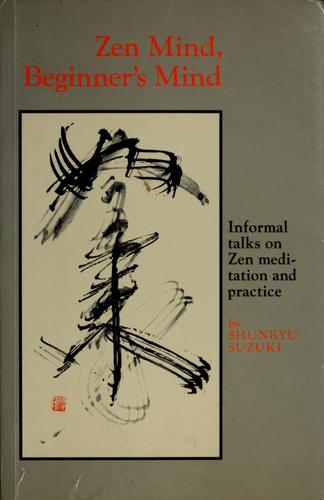
BookShunryu Suzuki
Drawn from Shunryu Suzuki's informal talks to American Zen students, this book presents Soto Zen practice through brief teachings on posture, breathing, nonduality, effort, repetition, emptiness, and ‘beginner's mind.’ Suzuki repeatedly redirects attention from seeking a special enlightenment experience toward wholehearted zazen and the fresh, uncluttered practice of this moment.
 Book
BookMartin Laird
Augustinian scholar Martin Laird introduces Christian contemplative prayer as a practice of discovering the spacious awareness already present beneath compulsive thought. Drawing on the desert tradition and later contemplatives, he describes attention to the breath or a prayer word, the recurring ‘afflictions’ of thought, and a deepening silence in which distraction is neither fought nor followed but met with patient awareness before God.
 Book
BookCynthia Bourgeault
Cynthia Bourgeault teaches Centering Prayer as a Christian practice of consent, surrender, and interior silence. Alongside practical instruction, she describes attention, the sacred word, emotional programs, false-self patterns, and the way contemplative practice may alter one's relationship to thought and identity rather than simply produce calm.
 Book
BookAbraham Joshua Heschel
Abraham Joshua Heschel presents the Jewish Sabbath as a ‘palace in time’: a sacred rhythm through which people cease trying to master the world of space and learn to receive holiness, rest, delight, and presence. His poetic theological meditation joins biblical interpretation, rabbinic tradition, Jewish practice, and a critique of modern civilization's fixation on production and possession.
What can living traditions teach me on their own terms?
Living traditions have their own voices, histories, and internal differences. These introductions offer points of entry while respecting the worlds from which their teachings come.
 Book
BookSarah Hurwitz
Sarah Hurwitz combines memoir with an inviting exploration of Jewish theology, ethics, prayer, holidays, texts, community, and approaches to God. Beginning from her own surprise at discovering a Judaism more intellectually and spiritually expansive than the version she had absorbed growing up, she introduces classical sources and contemporary practices as material for adult questioning rather than a list of ethnic customs.
 Book
BookThich Nhat Hanh
Thích Nhất Hạnh presents central Buddhist teachings—including the Four Noble Truths, the Noble Eightfold Path, the Three Dharma Seals, the Three Doors of Liberation, and the Seven Factors of Awakening—as interlocking ways of understanding suffering and cultivating compassion, joy, and freedom. Written from his Vietnamese Thiền and Plum Village lineage, the book connects doctrine to mindfulness practice and ordinary life.
 Book
BookDevdutt Pattanaik
Devdutt Pattanaik reorganizes themes from the Bhagavad Gita into an illustrated contemporary interpretation concerned with identity, desire, action, exchange, the self, and the other. He explicitly presents the work as ‘my’ Gita rather than a translation, using comparisons and diagrams to make one reading accessible to modern audiences.
 Book
BookA. Helwa
A. Helwa presents Islam as a path of love, mercy, surrender, and intimate relationship with God. Drawing on the Qur’an, stories of the prophets, prayer, poetry, and mystical teaching, she explores repentance, gratitude, human purpose, and the practices of Muslim life. The book is written devotionally, inviting the reader to experience Islamic faith from the heart rather than only learn facts about it.
 Book
BookReza Aslan
Reza Aslan narrates the origins and development of Islam from Muhammad and the early Muslim community through debates over authority, law, sectarian difference, colonialism, reform, and modern political struggle. He writes as a Muslim scholar of religions and advances an accessible, reform-oriented interpretation in which Islamic history is dynamic, internally plural, and repeatedly shaped by human contests over power and meaning.
 Book
BookKaitlin B. Curtice
Kaitlin Curtice reflects on Potawatomi identity, land, ancestry, motherhood, belonging, and spirituality after formation in white evangelical Christianity. Blending memoir, poetry, history, and prayer, she describes reconnecting with Indigenous identity while discerning what can be carried, healed, or relinquished from Christian inheritance.
 Book
BookVine Deloria Jr.
Standing Rock Sioux scholar Vine Deloria Jr. contrasts Indigenous land-based religious worlds with Western Christianity's emphasis on universal history, mission, and doctrinal authority. He examines colonialism, sacred place, revelation, time, ecological relation, and the political consequences of a religion that claimed the right to displace peoples and overwrite their worlds.
 Book
BookRanya Idliby, Suzanne Oliver & Priscilla Warner
Ranya Idliby, Suzanne Oliver, and Priscilla Warner recount an interfaith friendship among a Muslim, Christian, and Jew formed after September 11. Their conversations move through God, Scripture, prayer, Jesus, Muhammad, Israel and Palestine, antisemitism, Islamophobia, stereotypes, family, holidays, and the pressures of representing traditions while maintaining affection through real disagreement.
Want to go further back? Read the Sources →
How do I listen to my inner life?
People listen inwardly through discernment, creativity, therapeutic reflection, and spiritual practice. These books make different kinds of claims; their methods and sources should remain distinct.
 Book
BookParker J. Palmer
Parker Palmer approaches vocation as listening for the life that wants to be lived rather than imposing an idealized calling. Through memoir, Quaker-inflected reflection, depression, teaching, limits, failure, and the image of ‘way opening’ and ‘way closing,’ he argues that temperament and constraint may reveal vocation as clearly as aspiration.
BookJulia Cameron
A guided course using morning pages and other exercises to listen for and practice creativity.
BookMartha Beck
A four-stage self-inquiry process for noticing where one’s life and inner sense of truth have diverged.
 Book
BookParker J. Palmer
Palmer describes circles of trust and practices of listening meant to bring one’s inner life into more honest relationship with public life.
 Book
BookHenri J. M. Nouwen
Drawn from Henri Nouwen’s writings and course materials after his death, this volume presents Christian discernment as sustained attention to God through Scripture, prayer, community, desire, memory, relationships, suffering, and events. Rather than promise a private code for extracting divine instructions, it asks readers to notice recurring interior movements and to interpret a life’s direction within practices of patience, gratitude, compassion, and faithful action.
BookRichard C. Schwartz
Introduces Internal Family Systems, using compassionate attention to inner parts as a way to understand and respond to oneself.
 Book
BookPaul Selig
A channeled teaching presents identity and spiritual transformation through language of divine self, vibration, and alignment.
 Book
BookHelen Schucman (scribe)
A Course in Miracles is a three-part spiritual curriculum—a Text, Workbook for Students, and Manual for Teachers—presented in Christian language but radically reinterpreting sin, salvation, forgiveness, perception, and the world. It teaches that separation from God is an illusion, that fear arises from mistaken perception, and that forgiveness permits a shift from fear toward awareness of love.
BookShanti Christo Foundation (publisher/steward); material attributed by the Foundation to Jeshua through Jon Marc Hammer
The Shanti Christo Foundation presents these lessons as communications from Jeshua received through Jon Marc Hammer. Across forgiveness, desire, mind, embodiment, relationship, and awakening, the text teaches that fear and separation arise from mistaken identification and that Christ-mindedness is cultivated through radical responsibility, surrender, and choosing love. Its voice and metaphysics overlap with, but are institutionally distinct from, A Course in Miracles.
What can we know about consciousness and mystery?
What is experience, and what does it tell us about reality? Follow neuroscience and philosophy into contested theories, contemplative reports, and testimony about unusual experiences.
BookMichael Pollan
A reported exploration of consciousness across science, philosophy, and accounts of unusual experience.
 Book
BookAnil Seth
Neuroscientist Anil Seth explains consciousness through the brain's ongoing predictions about the world and the body. Perception, in his account, is a controlled construction constrained by sensory signals; the experienced self is likewise assembled through embodied processes rather than located in a single inner essence. He connects experiments, illusions, clinical cases, and theory while defending biological naturalism.
Annaka Harris
Annaka Harris introduces the mystery of subjective experience through short thought experiments about perception, free will, the self, and whether consciousness may be more basic in nature than we usually assume. The book is less a survey of the field than an invitation to notice how strange ordinary awareness becomes when examined closely.
BookDavid B. Yaden; Andrew B. Newberg
David Yaden and Andrew Newberg update William James's classic inquiry with contemporary psychology and neuroscience. They distinguish types of spiritual experience, examine how such experiences arise and affect people, and separate the study of reported experience from conclusions about ultimate reality.
Andy Clark
Philosopher and cognitive scientist Andy Clark explains the brain as an active prediction system rather than a passive recorder. Perception, action, expectation, and the body's signals work together as the brain continually anticipates what is happening and corrects itself when the world pushes back.
 Book
BookDonald D. Hoffman
Hoffman argues that evolution favors useful perceptions over transparent access to reality and proposes a broader conscious-agents account.
BookBernardo Kastrup
Kastrup argues that mind is fundamental and develops an idealist interpretation of bodies, brains, and the apparent physical world.
 Book
BookAdyashanti
Adyashanti addresses what may happen after a nondual opening or awakening experience: disorientation, loss of familiar identity, unfinished psychological material, relationship changes, embodiment, and the gap between a temporary glimpse and stable integration. The book assumes some prior experiential recognition rather than introducing meditation from the beginning.
 Book
BookRaymond A. Moody Jr.
Psychiatrist Raymond Moody introduced the term near-death experience through interviews with people who reported recurring features around close brushes with death: leaving the body, moving through darkness, encountering light or deceased persons, reviewing one’s life, reaching a boundary, and returning changed. The book presents these similarities as a phenomenon worthy of study while considering, but not claiming to prove, survival after death.
 Book
BookDavid J. Chalmers
Chalmers develops the hard problem of consciousness and argues that explaining cognitive functions alone does not explain subjective experience.