A LIBRARIAN’S ORIENTATION
What this book explores
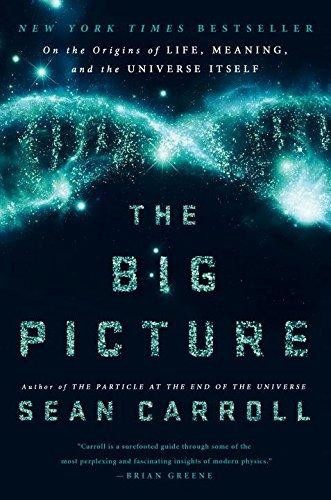
Physicist Sean Carroll moves from quantum fields, cosmology, and emergence to life, consciousness, morality, and meaning. He calls his framework ‘poetic naturalism’: there is one natural world, but multiple vocabularies can truthfully describe its higher-level patterns. The book argues that purpose and value can be constructed and real for human beings without being written into the universe by a supernatural source.
EDITORIAL NOTE
Why it’s in the Library
It gives travelers a substantial, affirmative example of a nonreligious worldview rather than presenting naturalism only as criticism of belief. Carroll shows how scientific explanation, everyday person-language, moral commitment, wonder, and chosen meaning might coexist. Paired with religious science writers, the book clarifies where shared evidence ends and philosophical interpretation begins, helping readers compare live options without treating unbelief as spiritual absence.
Good starting place if…
You want a scientifically informed, nonreligious account of reality, consciousness, morality, and meaning that is constructive rather than merely anti-theological.
Know before you begin…
Carroll argues from philosophical naturalism and does not treat God as a live explanatory option; this is a worldview proposal built in conversation with science, not a conclusion delivered by physics alone. His accounts of consciousness, morality, and emergence are accessible syntheses within active philosophical debates. Readers seeking equal presentation of theistic alternatives will not find it here, and readers new to physics may find the book's range more demanding than its conversational style suggests.