THE INNER ATLASMy Shelf · 0
Menu

SCRIPTURES · CLASSICS · DOCUMENTS

Read Original Sources

Meet writings and documents that helped shape traditions, practices, and events—not only later books about them.

CHOOSE YOUR WAY IN

Begin where your curiosity is.

Choose a tradition, a question, or the amount of reading you have room for today.

A NOTE ON EDITIONS

Every source reaches us through an edition. Translation, selection, and editorial choices shape what you meet. Each holding makes those choices visible.

ENTER BY TRADITION

Begin with the trunk. Then follow a branch.

Start with a text that offers shared ground in a tradition. From there, follow a particular voice, practice, or school.

01

JEWISH WORLDS

Read a scripture within Jewish interpretation.

Begin with the Tanakh as a Jewish library rather than a preface to Christianity.

Where this path leadsBegin with a Jewish study edition of the Tanakh, then meet translated Kabbalistic passages. Rabbinic and Second Temple writings remain important gaps.

02

CHRISTIAN WORLDS

Move from inherited text into theology, worship, and reform.

See how Christian meaning is argued, prayed, institutionalized, and contested across time.

Where this path leadsThis path moves through early theology, Jewish context, worship, contemplation, reform, and public teaching. It is an entrance, not a survey of every Christian tradition.

ENTER BY QUESTION

Let a question cross traditions without erasing them.

These are comparisons to think with—not claims that different traditions are secretly saying the same thing.

ENTER BY READINESS

How much context can you carry today?

THE EDITORIAL COLLECTION

Now meet every holding in context.

See what each work is, why this edition was chosen, where to begin, what to notice, and what to read alongside.

SCRIPTURES & RECEIVED TEXTS

Meet texts communities receive, recite, and return to.

Translations and study editions chosen to preserve context rather than turn living scriptures into detached quotations.

10 holdings in this first release
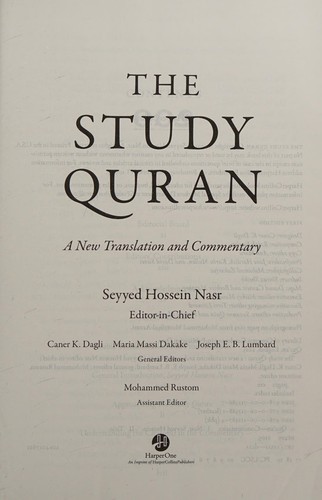
Cover of The Study Quran: A New Translation and Commentary by Seyyed Hossein Nasr, editor-in-chief; Caner K. Dagli, Maria Massi Dakake, Joseph E. B. Lumbard, general editors; Mohammed Rustom, assistant editor.Book

Scripture with commentary

The Study Quran: A New Translation and Commentary

Seyyed Hossein Nasr, editor-in-chief; Caner K. Dagli, Maria Massi Dakake, Joseph E. B. Lumbard, general editors; Mohammed Rustom, assistant editor

Islamic · Qur’anic text: 7th century; edition: 2015

What is this?
An English Quran translation with extensive commentary drawing on Sunni and Shia, legal, theological, philosophical, and mystical sources, plus scholarly essays and reference material.
Why this edition?
A substantial study edition whose commentary draws from Sunni and Shia, legal, theological, philosophical, and mystical traditions.
Where might I begin?
Use the introductions to a short sura, then compare its translation and commentary before moving into the longer chapters.
What should I know?
Its editors make a deliberately traditional and perennialist synthesis. That breadth is useful, but it is not a neutral or exhaustive account of Muslim interpretation.
Cover of The Qur'an by M. A. S. Abdel Haleem.Book

Scripture in translation

The Qur'an

M. A. S. Abdel Haleem

Islamic · Qur’anic text: 7th century; edition: 2005

What is this?
M. A. S. Abdel Haleem translates the Qur'an into contemporary English with attention to textual flow, context, and the connections among passages. The volume includes an introduction, explanatory notes, and a thematic index, offering English-language readers access to Islam's scripture as sustained proclamation about God, guidance, mercy, judgment, prophetic history, worship, ethics, and community.
Why this edition?
Chosen as the more direct, readable route through the whole Qur’an, distinct from the much larger Study Quran.
Where might I begin?
Read the translator’s introduction, then begin with a shorter sura rather than assuming the book follows a modern narrative sequence.
What should I know?
For Muslims, the Qur’an is properly the Arabic revelation; every English rendering interprets its meaning and cannot replace recitation, tafsir, or lived tradition.
Cover of The Bhagavad Gita.Book

Scripture in accessible translation

The Bhagavad Gita

Eknath Easwaran

Hindu / Vedantic · Ancient Indian text; edition: 1985

What is this?
The Gita places a warrior's moral crisis inside a teaching on dharma, disciplined action, devotion, knowledge, and the nature of the self. Easwaran's edition offers substantial orientation while preserving the scriptural dialogue.
Why this edition?
The accessible anchor edition: substantial orientation and a readable translation for a traveler meeting the Gita for the first time.
Where might I begin?
Start with Arjuna’s crisis in chapters 1–2; notice how later teachings on action, knowledge, and devotion answer it differently.
What should I know?
The Gita is interpreted differently across Hindu traditions. Easwaran is an inviting doorway, not a substitute for tradition-specific commentary.
Decorative; adjacent title and creator provide identity.Book

Scripture with tradition-rooted commentary

The Complete Bhagavad Gita

Swami Tapasyananda

Hindu / Vedantic · Ancient Indian text; modern Ramakrishna Order edition

What is this?
A complete Gita translation with extensive commentary from the Ramakrishna-Vedanta tradition, deepening beyond the accessible Easwaran edition.
Why this edition?
Retained beside Easwaran because it offers a materially different purpose: deeper, tradition-rooted study rather than the gentlest first doorway.
Where might I begin?
Use it after a first reading of the dialogue, or follow one chapter closely with the commentary rather than attempting the volume straight through.
What should I know?
Its Vedantic frame is a real interpretive home, not a view from nowhere; other Hindu schools read the Gita differently.
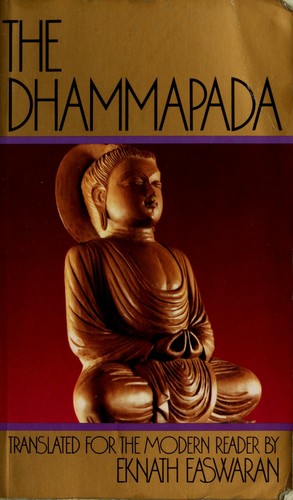
Cover of The Dhammapada by Eknath EaswaranBook

Canonical verse collection in translation

The Dhammapada

Eknath Easwaran

Buddhist — Theravada · Early Buddhist verses; edition: 1999

What is this?
Easwaran translates and introduces a widely read collection of verses on mind, conduct, attention, and liberation attributed to the Buddha.
Why this edition?
A compact, approachable route into a widely received collection of teachings on mind, conduct, attention, and liberation.
Where might I begin?
Read one short chapter at a time—such as Pairs or Mind—and resist turning individual verses into slogans detached from Buddhist practice.
What should I know?
The verses come through the Pali tradition, and the translator’s universalizing presentation can soften historical and doctrinal particularity.
Cover of The Jewish Study Bible by Adele Berlin and Marc Zvi Brettler, editorsBook

Tanakh with scholarly commentary

The Jewish Study Bible

Adele Berlin and Marc Zvi Brettler, editors

Jewish · Ancient Israelite and Jewish texts; study edition: 2004

What is this?
The Tanakh presented with Jewish scholarly notes and essays that orient readers to Hebrew, history, interpretation, and Jewish reception.
Why this edition?
Chosen to place the Tanakh within Jewish scholarship and reception instead of treating it mainly as a preface to Christianity.
Where might I begin?
Choose one biblical book, read its introduction, and let the notes revise what familiar English terms may have led you to assume.
What should I know?
This is a large multi-author reference work, not one Jewish consensus or a simple first introduction.
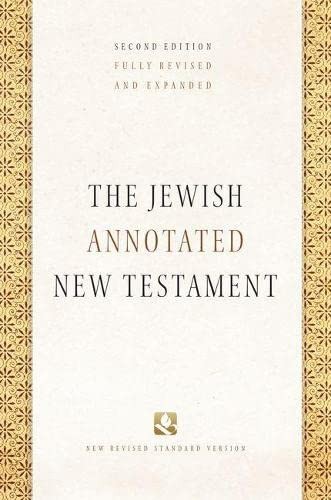
Cover of The Jewish Annotated New Testament by Amy-Jill Levine and Marc Zvi Brettler, editorsBook

New Testament with Jewish annotation

The Jewish Annotated New Testament

Amy-Jill Levine and Marc Zvi Brettler, editors

Christian texts in Jewish scholarly context · 1st–2nd-century Christian texts; study edition: 2017

What is this?
Edited by Jewish scholars Amy-Jill Levine and Marc Zvi Brettler, this study edition presents the New Testament with essays, annotations, maps, and historical context focused on its Jewish worlds and its reception. Contributors explain Jewish practices, texts, movements, and interpretive debates while identifying passages and later readings that have fostered anti-Judaism. The second edition expands engagement with Jewish–Christian relations and diverse Jewish contexts.
Why this edition?
Retained because its Jewish annotation corrects Christian habits that erase the New Testament’s Jewish worlds or reproduce anti-Judaism.
Where might I begin?
Read one Gospel introduction and its annotations, then consult the essays on Jewish history and later reception.
What should I know?
It is a Jewish-annotated edition of Christian texts, not a Jewish endorsement of New Testament theology or a single account of ancient Judaism.
Cover of The Yoga Sutras of Patañjali.Book

Sutra text with extensive commentary

The Yoga Sutras of Patañjali

Edwin F. Bryant, translator and commentator

Classical Yoga / Hindu · Classical Indian text; edition: 2009

What is this?
A detailed translation and tradition-rich commentary on the foundational aphorisms of classical Yoga philosophy and practice.
Why this edition?
A deep edition that makes classical Yoga’s philosophy and commentarial traditions visible beyond modern posture practice.
Where might I begin?
Read the opening sutras with the commentary; the aphorisms are too compressed to carry their meaning alone.
What should I know?
The edition presents a particular classical Yoga metaphysics and does not represent every Hindu, yogic, or modern practice tradition.
Cover of In the Buddha's Words by Bhikkhu BodhiBook

Canonical anthology with introductions

In the Buddha's Words

Bhikkhu Bodhi

Buddhist — Theravada · Early Buddhist discourses; anthology: 2005

What is this?
A thematic anthology of discourses from the Pali Canon with introductions by a major Theravada translator.
Why this edition?
Its thematic organization gives serious readers a navigable route into the Pali Canon without pretending to reproduce the whole canon.
Where might I begin?
Use the thematic introductions and choose the section closest to your question instead of reading all 496 pages in sequence.
What should I know?
Selection and arrangement are themselves interpretation; this represents Theravada canonical teaching rather than Buddhism as a whole.
Decorative; adjacent title and creator provide identity.Book

Practice poem in translation

The Way of the Bodhisattva

Shantideva; translated by the Padmakara Translation Group

Buddhist — Mahayana · 8th-century Indian Buddhist text; revised modern translation

What is this?
A classic Mahayana poem and practice text on compassion, patience, wisdom, and the bodhisattva commitment.
Why this edition?
A tradition-respected translation of an influential account of compassion, patience, wisdom, and the bodhisattva commitment.
Where might I begin?
Begin with the chapters on carefulness, patience, or meditation; use a teacher or companion when the ascetic rhetoric feels severe.
What should I know?
It belongs to an Indian Mahayana monastic world and should not be flattened into modern self-help or made to stand for every Buddhist school.

WISDOM, PHILOSOPHY & PRACTICE

Enter an argument, a poem, or a disciplined way of seeing.

Classics whose meaning is carried through translation, commentary, practice, and long disagreement.

6 holdings in this first release
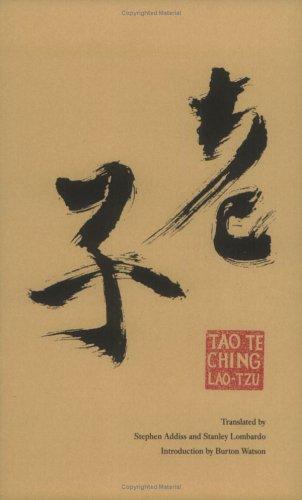
Cover of Tao Te Ching by Lao Tzu; translated by Red Pine.Book

Classic with historical commentary

Tao Te Ching

Lao Tzu; translated by Red Pine

Daoist · Ancient Chinese text; edition: 2009

What is this?
Red Pine translates the Tao Te Ching and places each brief chapter beside selections from roughly two millennia of Chinese commentary. The result presents the Dao, virtue, noncoercive action, humility, simplicity, governance, desire, usefulness, and return not as a single modern paraphrase but as a text repeatedly interpreted by poets, monks, officials, scholars, and religious practitioners.
Why this edition?
The anchor study edition: it places every chapter beside selections from two millennia of Chinese commentary.
Where might I begin?
Read a few short chapters together with their commentators; let disagreement slow the urge to extract a single slogan.
What should I know?
Authorship, date, and key terms are contested, and Red Pine’s selection of commentators remains an editorial act.
Cover of Lao Tzu: Tao Te Ching.Book

Literary rendition of a classic

Lao Tzu: Tao Te Ching

Lao Tzu; translated by Ursula K. Le Guin

Daoist · Ancient Chinese text; literary edition: 2019

What is this?
Le Guin’s spare interpretive version foregrounds humility, noncoercion, usefulness, and the ordinary mystery of the Tao.
Why this edition?
Retained beside Red Pine because its spare language offers a genuinely different traveler purpose: poetic access rather than scholarly apparatus.
Where might I begin?
Read slowly in small portions, then compare a passage that matters to you with the Red Pine edition and its commentaries.
What should I know?
Le Guin called this a rendition. Its beauty is part of its value, and its distance from the source language is part of its limit.
Decorative; adjacent title and creator provide identity.Book

Complete classic in scholarly translation

Zhuangzi: The Complete Writings

Zhuangzi; translated by Brook Ziporyn

Daoist · Ancient Chinese text; complete translation: 2020

What is this?
A complete contemporary translation of the playful, paradoxical Daoist classic with scholarly notes.
Why this edition?
A complete, contemporary scholarly translation chosen to open the Zhuangzi beyond its most frequently excerpted Inner Chapters.
Where might I begin?
Begin with the Inner Chapters—especially Free and Easy Wandering—before deciding whether to continue into the more layered Outer and Miscellaneous Chapters.
What should I know?
The Zhuangzi is composite, contested, comic, and resistant to one settled doctrine. A complete translation is a deep branch, not the gentlest first doorway into Daoist thought.
Cover of The Upanishads.Book

Selected Upanishads in accessible translation

The Upanishads

Eknath Easwaran

Hindu / Vedantic · Ancient Indian texts; edition: 1991

What is this?
Easwaran translates selected Upanishads exploring ultimate reality, the self, death, knowledge, and liberation.
Why this edition?
A readable selection with enough orientation to help a newcomer encounter several Upanishads without pretending that they form one seamless book.
Where might I begin?
Read the Katha Upanishad first: its conversation with death gives a memorable path into questions of self, knowledge, desire, and liberation.
What should I know?
The Upanishads are diverse texts interpreted differently across Vedanta schools. Easwaran is an inviting doorway whose selection and universalizing voice remain interpretive choices.
Cover of Meditations.Book

Private philosophical reflections

Meditations

Marcus Aurelius; translated by Gregory Hays

Greco-Roman — Stoic · 2nd century CE; Gregory Hays translation: 2002–2003

What is this?
Private Stoic reflections on attention, mortality, duty, judgment, and living within what cannot be controlled.
Why this edition?
Gregory Hays offers the clearest welcoming doorway into Marcus Aurelius: contemporary English, a useful introduction, and the shape of the emperor’s private notes left visible.
Where might I begin?
Begin with books 2 and 4, reading only a few entries at a time. Notice which lines are self-correction, which are philosophical exercise, and which assume an ancient social world.
What should I know?
These were an emperor’s private notes, not a complete guide to Stoicism. Their language of acceptance should not be used to excuse injustice, emotional suppression, or preventable harm.
Cover of The Essential Kabbalah by Daniel C. MattBook

Translated anthology of Jewish mystical writings

The Essential Kabbalah

Daniel C. Matt

Jewish — Kabbalistic · Medieval and early modern sources; Daniel C. Matt edition: 1996

What is this?
Brief translated passages introduce Kabbalistic images of Ein Sof, creation, divine immanence, and human action.
Why this edition?
Daniel Matt’s brief, carefully translated selections offer a manageable entrance into Kabbalistic language without pretending that one excerpt or one school contains the whole tradition.
Where might I begin?
Read the introduction, then stay with one cluster of passages—such as Ein Sof, creation, or the divine presence—before following the references toward fuller works.
What should I know?
This is an anthology shaped by Matt’s selection and arrangement. It does not replace complete texts, Jewish practice, historical study, or the different Kabbalistic schools that interpret them.

VOICES THAT SHAPED TRADITIONS

Hear people and communities who changed what came after them.

Theological, liturgical, and reforming works read as situated voices—not timeless consensus statements.

7 holdings in this first release
Cover of On the Incarnation by Athanasius.Book

Early theological treatise

On the Incarnation

Athanasius

Christian — patristic · 4th century; modern English edition

What is this?
Athanasius explains creation, human corruption, the incarnation, death, and restoration in a compact patristic work. It helps visitors encounter early Christian theology directly rather than only through later summaries.
Why this edition?
A compact way to encounter an influential early Christian account of incarnation and restoration directly rather than through later summaries.
Where might I begin?
Read the opening account of creation and corruption, then track how Athanasius understands incarnation as restoration rather than only legal payment.
What should I know?
The work argues confessionally within a fourth-century world; some ancient rhetoric about religions and peoples requires historical context.
Cover of The Philokalia, Volume 1.Book

Collection of ascetical and contemplative writings

The Philokalia, Volume 1

G. E. H. Palmer; Philip Sherrard; Kallistos Ware

Christian — Eastern Orthodox contemplative · Texts from the 4th–15th centuries; English volume: 1983

What is this?
The first English volume gathers early Orthodox ascetical texts on watchfulness, prayer, passions, discernment, and the transformation of attention.
Why this edition?
Volume 1 is the clearest bounded entrance into the English Philokalia, gathering early writings while avoiding five separate records for one larger collection.
Where might I begin?
Begin with the introductory material and one short author on watchfulness or prayer. Treat the volume as a library to revisit, not a book to finish quickly.
What should I know?
These texts come from demanding Orthodox monastic and sacramental settings. Practices such as the Jesus Prayer should not be detached from that setting and repackaged as generic wellness techniques.
Cover of The Book of Common Prayer.Book

Authorized liturgical book

The Book of Common Prayer

The Episcopal Church

Christian — Anglican / Episcopal · 1979 Episcopal prayer book; abridged print edition represented

What is this?
The authorized Episcopal liturgical book of daily prayer, Eucharist, rites, psalms, and pastoral offices.
Why this edition?
Included as a working primary source for how Anglican worship forms time, prayer, sacraments, pastoral care, and communal language.
Where might I begin?
Try Morning or Evening Prayer, then look at one rite—such as baptism or Eucharist—to see the theology carried by the practice.
What should I know?
This is specifically the 1979 Episcopal Church book and an abridged edition; Anglican provinces and communities use other authorized forms.
Cover of Laudato Si'.Book

Papal encyclical

Laudato Si'

Pope Francis

Christian — Roman Catholic · 2015

What is this?
Pope Francis’s 2015 encyclical develops an integral ecology joining climate change, biodiversity, water, pollution, poverty, urban life, technology, economics, consumerism, and spiritual responsibility. Drawing on scientific findings, Scripture, Catholic social teaching, bishops’ conferences, and dialogue beyond Catholicism, it argues that care for the earth and care for vulnerable people are one moral crisis rather than separable causes.
Why this edition?
A consequential Catholic teaching document that joins climate, poverty, technology, economics, and spiritual responsibility in one moral frame.
Where might I begin?
Start with the introduction and chapter 1, then use the headings to follow the ecological, economic, or spiritual thread that brought you here.
What should I know?
An encyclical is not an independent climate assessment or neutral policy program, and its institutional setting carries real exclusions and tensions.
Decorative; adjacent title and creator provide identity.Book

Reform-era commentary and intervention

The Woman's Bible

Elizabeth Cady Stanton and the Revising Committee

Early feminist biblical criticism · 1895–1898; later reprint represented

What is this?
A foundational nineteenth-century feminist critique of biblical texts and their use in restricting women.
Why this edition?
Included as a formative feminist intervention into biblical interpretation and the political use of Scripture against women.
Where might I begin?
Read the preface and one biblical section alongside the social debates the Revising Committee was addressing.
What should I know?
Its authors were situated in nineteenth-century white U.S. suffrage movements; its exclusions and period assumptions belong inside the reading, not outside it.
Cover of The Book of Assistance by Abdallah ibn Alawi al-Haddad; translated by Mostafa al-BadawiBook

Classical devotional and ethical manual

The Book of Assistance

Abdallah ibn Alawi al-Haddad; translated by Mostafa al-Badawi

Islamic — Sunni Sufi · 17th–18th-century Yemen; translation edition represented: 2003

What is this?
A concise classical manual of intention, prayer, remembrance, conduct, and spiritual discipline from the Hadrami Sufi tradition.
Why this edition?
A concise, tradition-rooted guide in which prayer, remembrance, intention, ethics, companionship, and ordinary conduct remain joined.
Where might I begin?
Begin with the short sections on intention, vigilance, and daily devotions; read a few pages as practical instruction rather than rushing through it as information.
What should I know?
Al-Haddad writes for committed Sunni Muslim practitioners within the Ba Alawi tradition. The work should not be detached from Islam and repackaged as generic spirituality.
Cover of The Conference of the Birds.Book

Mystical journey poem

The Conference of the Birds

Farid ud-Din Attar; translated by Dick Davis and Afkham Darbandi

Islamic — Persian Sufi · 12th-century Persian poem; modern Penguin translation

What is this?
A Persian Sufi allegory in which birds journey through spiritual valleys toward the Simorgh and discover what their seeking requires.
Why this edition?
Dick Davis and Afkham Darbandi offer a highly readable verse translation that keeps the poem’s narrative momentum, wit, severity, and strangeness visible.
Where might I begin?
Meet the birds and their excuses, then follow the seven valleys. The frame journey is easier to hold when the embedded tales are allowed to interrupt it.
What should I know?
The poem belongs to a medieval Persian Islamic and Sufi world. Its images, hierarchies, and provocations need context and should not be flattened into universal inspiration.

WITNESS & PUBLIC DOCUMENTS

Read records that became evidence, practice, or public intervention.

Anthologies and documents that let travelers examine a tradition’s words and practices closer to their source.

3 holdings in this first release
Cover of The Muslim Jesus.Book

Anthology of classical Arabic sayings and stories

The Muslim Jesus

Tarif Khalidi

Islamic · Classical and medieval materials; anthology: 2001

What is this?
A collection and study of sayings and stories about Jesus in classical Arabic Islamic literature.
Why this edition?
A bounded way to encounter the Muslim literary and devotional imagination of Jesus through translated source materials rather than Christian comparison alone.
Where might I begin?
Read the introduction, then sample the sayings by theme while noticing how the portrait differs across sources and periods.
What should I know?
This is an edited anthology, not one authoritative Islamic biography of Jesus and not a Muslim harmony of the canonical Gospels.
Cover of The Sacred Pipe.Book

Recorded account of sacred rites and cosmology

The Sacred Pipe

Black Elk; recorded and edited by Joseph Epes Brown

Lakota — Oglala sacred tradition · Teachings recorded in the 1940s; first published 1953; University of Oklahoma Press edition: 1989

What is this?
A consequential account of Lakota sacred rites and cosmology transmitted by Black Elk through Joseph Epes Brown.
Why this edition?
The University of Oklahoma Press edition keeps a consequential account by Black Elk available while making its named recorder and the conditions of print transmission visible.
Where might I begin?
Read the foreword and introduction before the rites. Begin with the account of the sacred pipe, attending to relationships among ceremony, land, community, and responsibility.
What should I know?
Publication does not turn culturally specific rites into a practice manual for outsiders. Colonial history, sacred boundaries, translation, and Brown’s mediation belong inside any responsible reading.
Cover of Common Prayer by Shane Claiborne, Jonathan Wilson-Hartgrove, and Enuma OkoroBook

Contemporary prayer book

Common Prayer

Shane Claiborne, Jonathan Wilson-Hartgrove, and Enuma Okoro

Christian — new monastic / ecumenical · 2010

What is this?
A year-round collection of daily prayer, song, Scripture, saints, and justice-oriented remembrance for communities and individuals.
Why this edition?
Included as a lived contemporary source: a year-round pattern of prayer, song, Scripture, saints, and justice-oriented remembrance.
Where might I begin?
Use one day’s morning and evening prayer before deciding whether the book’s full annual rhythm fits you.
What should I know?
Its new-monastic, justice-oriented Christian synthesis is intentionally constructed and should not be mistaken for a universal or historic common prayer.

A GROWING COLLECTION

More original sources are coming.

This first shelf makes the Library’s strongest existing source texts easier to find and enter. New traditions and texts will be added as carefully chosen editions are ready.

Open the complete shelf →