Anil Seth on Emergence, Information, and Consciousness
Sean Carroll
Makes a leading neuroscientist’s physicalist account of consciousness available in direct comparison with emergence and information theory.
THE LIBRARY · 662 BOOKS · 232 PODCASTS & EPISODES · 47 COMMUNITIES & DESTINATIONS · 10 MAPS
61 matching resources
Sean Carroll
Makes a leading neuroscientist’s physicalist account of consciousness available in direct comparison with emergence and information theory.
Richard Rohr; Brie Stoner; Paul Swanson
Stuart A. Vyse
Psychologist Stuart Vyse examines why intelligent people develop and retain superstitious beliefs and rituals. Drawing on research into learning, coincidence, uncertainty, control, cultural transmission, and cognitive bias, he explains how meaningful patterns can become convincing even when a causal connection has not been demonstrated. Astrology appears within a wider human landscape of divination, luck, ritual, and magical thinking.
BookJoseph Chilton Pearce
Joseph Chilton Pearce argues that human development is shaped by interacting biological, emotional, cultural, and spiritual capacities and that experiences of transcendence can reorganize the body and brain. Moving across child development, neuroscience, contemplative traditions, heart research, culture, and personal story, he proposes that modern institutions inhibit an innate movement toward greater intelligence, compassion, and expanded consciousness.
BookNancey Murphy
Philosopher and theologian Nancey Murphy argues for ‘nonreductive physicalism’: human beings are wholly physical creatures whose complex capacities for reason, morality, relationship, and spirituality need not require an independently separable soul. Engaging neuroscience, philosophy of mind, biblical interpretation, and Christian theology, she asks how agency, identity, ethics, resurrection, and divine action can remain meaningful without substance dualism.
Alan Watts
A playful argument that the isolated ego is a social fiction and that persons belong to a larger field of life and reality.
Ginger Campbell
A single review compares Anil Seth, Antonio Damasio, Mark Solms and others, revealing disagreement within neuroscience of consciousness. This exact object earns inclusion because hearing the exchange performs work the 574-book shelf cannot supply as directly.
Ginger Campbell
Centers for Spiritual Living
A global directory of Centers for Spiritual Living communities teaching the New Thought philosophy known as Science of Mind.
Sean Carroll's Mindscape
A leading consciousness researcher and a physicalist host expose live evidentiary disagreement inside science rather than pushing the traveler toward a spiritual metaphysics. This exact conversation earns inclusion because the audio mode performs work a parallel book entry would not.
Annaka Harris
Annaka Harris introduces the mystery of subjective experience through short thought experiments about perception, free will, the self, and whether consciousness may be more basic in nature than we usually assume. The book is less a survey of the field than an invitation to notice how strange ordinary awareness becomes when examined closely.
BookDaniel C. Dennett
Dennett rejects a central inner observer and proposes a multiple-drafts account of consciousness grounded in cognitive processes.
Michael S. Gazzaniga
Cognitive neuroscientist Michael Gazzaniga approaches consciousness through the brain's many specialized systems. Drawing on split-brain research, biology, and the idea of emergence, he argues that conscious life need not come from one central location or inner commander.
Susan Blackmore
Susan Blackmore offers a compact tour of the questions that make consciousness difficult: subjective experience, attention, the self, free will, altered states, and the relation between mind and brain. She introduces major experiments and theories while showing why even the word consciousness remains contested.
BookMatthew Fox
Creation-spirituality theologian Matthew Fox retrieves the ancient language of the cosmic Christ to describe divine presence filling creation rather than being confined to the historical Jesus or the institutional church. Drawing from Christian mysticism, art, science, Indigenous references, ecology, and justice, he argues that recovering creation’s sacredness can unite contemplation with prophetic resistance to anthropocentrism, oppression, and ecological destruction.
BookHelen Schucman (scribe)
A Course in Miracles is a three-part spiritual curriculum—a Text, Workbook for Students, and Manual for Teachers—presented in Christian language but radically reinterpreting sin, salvation, forgiveness, perception, and the world. It teaches that separation from God is an illusion, that fear arises from mistaken perception, and that forgiveness permits a shift from fear toward awareness of love.
BookGary R. Renard
Gary Renard presents conversations he says occurred with two ascended masters who appeared in his home and taught a metaphysical interpretation of A Course in Miracles. The book describes the world as a projection of a split mind, emphasizes forgiveness as release from perception, interprets Jesus and the crucifixion nontraditionally, and frames awakening as remembering a nondual reality beyond bodies, time, guilt, and separation.
BookPierre Teilhard de Chardin
Teilhard interprets work, passivity, matter, evolution, and ordinary action within a world becoming transparent to divine presence.
BookThomas Metzinger
A philosopher argues that the experienced self is a transparent model generated by the brain rather than an entity perceived directly.
Ilia Delio
Franciscan theologian Ilia Delio brings Teilhard de Chardin, evolution, cosmology, consciousness, technology, and Christian mysticism into a vision of the emergent Christ. She presents creation as unfinished and relational, with Christ naming divine presence drawing the cosmos toward greater unity and love. Christian life therefore participates in evolution through creative action rather than waiting for salvation to arrive from outside matter and history.
BookAdyashanti
Adyashanti addresses what may happen after a nondual opening or awakening experience: disorientation, loss of familiar identity, unfinished psychological material, relationship changes, embodiment, and the gap between a temporary glimpse and stable integration. The book assumes some prior experiential recognition rather than introducing meditation from the beginning.
Sofia Carozza; The Catholic Scientist
A Catholic scientific conversation holds neural evidence and personhood claims in productive tension. This exact conversation earns inclusion because the audio mode performs work a parallel book entry would not.
Jack Symes; Andrew Horton; Oliver Marley; Rose de Castellane; Gregory Mill
Sam Coleman links pantheism, personal identity and consciousness closely enough for the assumptions to be tested rather than admired vaguely. This exact object earns inclusion because hearing the exchange performs work the 574-book shelf cannot supply as directly.
David Robson
Science writer David Robson explores how expectations can shape perception, stress responses, performance, habits, symptoms, and behavior. The book offers a lively account of real mind-body effects while repeatedly distinguishing them from the idea that belief can produce any desired external result.
Andy Clark
Philosopher and cognitive scientist Andy Clark explains the brain as an active prediction system rather than a passive recorder. Perception, action, expectation, and the body's signals work together as the brain continually anticipates what is happening and corrects itself when the world pushes back.
BookChristof Koch
A neuroscientist presents integrated information theory and argues that consciousness corresponds to intrinsic causal structure.
BookAntonio Damasio
A neurologist develops a layered account of emotion, feeling, core consciousness, and autobiographical self.
BookPhilip Goff
An analytic philosopher argues that physical science describes structure and behavior while leaving intrinsic conscious nature unexplained, motivating panpsychism.
BookCynthia Bourgeault
A deeper account of centering prayer as transformation of consciousness rather than only a relaxation or devotional technique.
BookMark Solms
A neuropsychologist argues that feeling and homeostatic regulation, not cortical cognition, are the foundation of consciousness.
Rupert Spira; Questioner
A very low-time but high-distance sample that lets a traveler test the language before deeper commitment.
Jeffrey J. Kripal
A scholar of religion asks what models of mind, imagination, and reality become possible when anomalous experiences are neither accepted literally nor dismissed in advance.
BookDouglas Hofstadter
A recursive account of selfhood in which symbolic feedback loops generate the persistent sense of “I.”
BookPaul Selig
I Am the Word introduces a channeled teaching in which human identity and spiritual transformation are described through vibration, alignment, and the realization of the divine self.
Podcast EpisodeElizabeth Oldfield
Connects attention, brain lateralization, and the perception of sacredness in a conversation shaped by biography rather than a laboratory-only frame.
BookBernardo Kastrup
Collected essays develop analytic idealism, dissociation, mind–world relations, and responses to objections.
BookKen Wilber
Ken Wilber proposes an ‘integral’ framework for relating interior experience, observable behavior, culture, social systems, developmental stages, and contemplative states. Using quadrants, levels, lines, states, and types, he aims to show why traditions and disciplines may speak accurately about different dimensions while mistaking a partial view for the whole.
BookBrian L. Weiss
Psychiatrist Brian Weiss recounts hypnotic sessions in which a patient reported previous lives and messages from spiritual ‘Masters.’ The experiences changed his interpretation of her symptoms, death, and consciousness and became a widely influential narrative in past-life regression and contemporary afterlife spirituality.
BookIain McGilchrist
An ambitious account of how contrasting modes of attention associated with the cerebral hemispheres shape culture and experience.
BookIain McGilchrist
A two-volume synthesis linking attention, hemisphere differences, epistemology, value, beauty, the sacred, and the nature of reality.
Nick Chater
Behavioral scientist Nick Chater argues that the mind does not consult a hidden storehouse of fully formed beliefs, desires, and meanings. Instead, it improvises interpretations in the moment, using past patterns and present circumstances to make sense of itself and the world.
Santa Fe Institute hosts
Melanie Mitchell uses AI’s repeated hype cycles to distinguish performance, abstraction and understanding. This exact object earns inclusion because hearing the exchange performs work the 574-book shelf cannot supply as directly.
David R. Loy
Loy compares forms of nonduality across Buddhist and other Asian philosophical traditions, asking which apparent similarities conceal important differences.
BookJulian Jaynes
A famously audacious theory proposes that introspective consciousness emerged historically after an earlier “bicameral” mentality.
BookPeter Godfrey-Smith
Octopus evolution and behavior become a route into how minds may arise along radically different biological paths.
Jack Symes; Andrew Horton; Oliver Marley; Rose de Castellane; Gregory Mill
BookEckhart Tolle
An influential contemporary invitation to disidentify from compulsive thought and return attention to present awareness.
BookJohn R. Searle
A critique of reductive and computational theories that insists consciousness is biologically real and irreducibly subjective.
Sean Carroll
Wonderology
A produced conversation opens consciousness without requiring a nondual or idealist destination. This exact conversation earns inclusion because the audio mode performs work a parallel book entry would not.
Ginger Campbell
Metzinger connects self-model theory, virtual reality and out-of-body experience without treating a vivid experience as evidence for a soul. This exact object earns inclusion because hearing the exchange performs work the 574-book shelf cannot supply as directly.
James Finley; Kirsten Oates
Turning to the Mystics earns a place as christian contemplative and mystical formation; its recurring teaching; dialogue; guided practice format gives listeners an ongoing way into mystics and contemplation.
BookIlia Delio
A dense constructive theology of evolution, divine creativity, and the relational wholeness of reality.
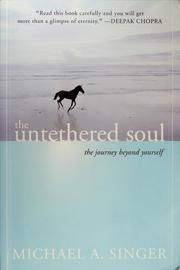
BookMichael A. Singer
An accessible invitation to observe inner speech, release defensive patterns, and identify less completely with mental content.
BookTor Nørretranders
A wide-ranging popular account of how much processing remains outside conscious awareness and how the experienced self is compressed.
Etzel Cardeña; Steven Jay Lynn; Stanley Krippner, editors
This American Psychological Association volume surveys research on unusual subjective experiences including synesthesia, hallucinations, lucid dreams, out-of-body and near-death experiences, anomalous healing, mystical experience, psi reports, past-life reports, and alien-abduction narratives. It studies the experiences and evidence without assuming that every report shares one cause.
Evan Thompson
Philosopher Evan Thompson follows consciousness through waking, dreaming, lucid dreaming, deep sleep, out-of-body experience, meditation, dying, and questions about the self. He places neuroscience and Western philosophy in careful conversation with Indian philosophical and contemplative traditions.
Steven Strogatz; Janna Levin
Anil Seth explains predictive perception and selfhood as live neuroscience, giving empirical traction without demanding metaphysical migration. This exact object earns inclusion because hearing the exchange performs work the 574-book shelf cannot supply as directly.
BookWarren S. Brown, Nancey Murphy, and H. Newton Malony, editors
An interdisciplinary collection on neuroscience, personhood, and Christian alternatives to simple body-soul dualism.
Bernardo Kastrup
Kastrup argues that mind is fundamental and that brains and physical bodies appear within consciousness rather than produce it, extending the framework toward death and anomalous phenomena.
Showing 60 of 61 resources.