Advaita Vedanta
Eliot Deutsch
A compact philosophical reconstruction of Advaita Vedanta’s accounts of reality, the self, ignorance, knowledge, and liberation.
THE LIBRARY · 662 BOOKS · 232 PODCASTS & EPISODES · 47 COMMUNITIES & DESTINATIONS · 10 MAPS
145 matching resources
Eliot Deutsch
A compact philosophical reconstruction of Advaita Vedanta’s accounts of reality, the self, ignorance, knowledge, and liberation.
Anantanand Rambachan
Rambachan explains Advaita Vedanta through its teachings about brahman, the world, human identity, liberation, and ethical life.
BookJohn S. Mbiti
A landmark African scholar’s synthesis that challenged Western dismissal of African religious worlds and philosophies.
David Albert Jones
A compact history of angels across Jewish, Christian, Islamic, philosophical, artistic, and popular-cultural settings.
Sean Carroll
Makes a leading neuroscientist’s physicalist account of consciousness available in direct comparison with emergence and information theory.
Rotating scholar hosts
Contemporary Afghan Sufi authority, gender and civil society appear through ethnography rather than generic mystical universalism. This exact object earns inclusion because hearing the exchange performs work the 574-book shelf cannot supply as directly.
Richard Rohr; Brie Stoner; Paul Swanson
BookMichael Sells
Michael Sells introduces selected early revelations of the Qur’an through new translations, brief commentary, and recordings of Arabic recitation. He pays close attention to sound, rhythm, imagery, and the movement between warning, mercy, creation, and human response. The book helps English-speaking readers encounter why the Qur’an is heard and recited as well as read.
Nicholas Campion
Historian Nicholas Campion studies modern Western astrology as a form of popular religion and lived cosmology. Rather than asking only whether predictions are accurate, he examines how astrologers understand an enchanted or purposeful cosmos, negotiate fate and free will, relate astrology to science and psychology, and locate the practice within New Age culture.
Peter Whitfield
Peter Whitfield follows astrology across more than two millennia, from ancient celestial interpretation through Greek and Roman thought, its contested relationship with Christianity, medieval and Renaissance revivals, and its later separation from modern astronomy. Richly illustrated and relatively brief, the book helps readers see astrology as a changing intellectual and religious tradition rather than a timeless set of personality labels.
BookParamahansa Yogananda
Yogananda’s spiritual autobiography moves from his Bengali childhood and search for a guru through discipleship under Sri Yukteswar, encounters with saints and yogis, and his work establishing Kriya Yoga in the United States. Memoir, spiritual instruction, interreligious interpretation, and hagiographic wonder stories combine to present yoga as a path toward direct realization of God rather than primarily physical exercise.
Stuart A. Vyse
Psychologist Stuart Vyse examines why intelligent people develop and retain superstitious beliefs and rituals. Drawing on research into learning, coincidence, uncertainty, control, cultural transmission, and cognitive bias, he explains how meaningful patterns can become convincing even when a causal connection has not been demonstrated. Astrology appears within a wider human landscape of divination, luck, ritual, and magical thinking.
BookEknath Easwaran
The Gita places a warrior's moral crisis inside a teaching on dharma, disciplined action, devotion, knowledge, and the nature of the self. Easwaran's edition offers substantial orientation while preserving the scriptural dialogue.
BookJoseph Chilton Pearce
Joseph Chilton Pearce argues that human development is shaped by interacting biological, emotional, cultural, and spiritual capacities and that experiences of transcendence can reorganize the body and brain. Moving across child development, neuroscience, contemplative traditions, heart research, culture, and personal story, he proposes that modern institutions inhibit an innate movement toward greater intelligence, compassion, and expanded consciousness.
BookBlack Elk; as told through John G. Neihardt
An influential mediated narrative of Black Elk’s visions, Lakota history, colonial violence, and communal loss.
BookNancey Murphy
Philosopher and theologian Nancey Murphy argues for ‘nonreductive physicalism’: human beings are wholly physical creatures whose complex capacities for reason, morality, relationship, and spirituality need not require an independently separable soul. Engaging neuroscience, philosophy of mind, biblical interpretation, and Christian theology, she asks how agency, identity, ethics, resurrection, and divine action can remain meaningful without substance dualism.
Alan Watts
A playful argument that the isolated ego is a social fiction and that persons belong to a larger field of life and reality.
Ginger Campbell
A single review compares Anil Seth, Antonio Damasio, Mark Solms and others, revealing disagreement within neuroscience of consciousness. This exact object earns inclusion because hearing the exchange performs work the 574-book shelf cannot supply as directly.
Ginger Campbell
BookDaniel C. Dennett
A philosopher’s proposal to study religion as a natural human phenomenon shaped by cultural evolution.
BookStephen Batchelor
Stephen Batchelor presents Buddhism as an agnostic way of life organized around awakening, ethical response, attention, and the four tasks rather than assent to rebirth, cosmology, or institutional authority. Drawing on his formation as a monk and later departure from orthodoxy, he reframes dharma for modern secular and religiously uncertain readers.
Centers for Spiritual Living
A global directory of Centers for Spiritual Living communities teaching the New Thought philosophy known as Science of Mind.
Sean Carroll's Mindscape
A leading consciousness researcher and a physicalist host expose live evidentiary disagreement inside science rather than pushing the traveler toward a spiritual metaphysics. This exact conversation earns inclusion because the audio mode performs work a parallel book entry would not.
Swami Tapasyananda
A complete Gita translation with extensive commentary from the Ramakrishna-Vedanta tradition, deepening beyond the accessible Easwaran edition.
BookFarid ud-Din Attar; translated by Dick Davis and Afkham Darbandi
A Persian Sufi allegory in which birds journey through spiritual valleys toward the Simorgh and discover what their seeking requires.
Annaka Harris
Annaka Harris introduces the mystery of subjective experience through short thought experiments about perception, free will, the self, and whether consciousness may be more basic in nature than we usually assume. The book is less a survey of the field than an invitation to notice how strange ordinary awareness becomes when examined closely.
BookDaniel C. Dennett
Dennett rejects a central inner observer and proposes a multiple-drafts account of consciousness grounded in cognitive processes.
Michael S. Gazzaniga
Cognitive neuroscientist Michael Gazzaniga approaches consciousness through the brain's many specialized systems. Drawing on split-brain research, biology, and the idea of emergence, he argues that conscious life need not come from one central location or inner commander.
Susan Blackmore
Susan Blackmore offers a compact tour of the questions that make consciousness difficult: subjective experience, attention, the self, free will, altered states, and the relation between mind and brain. She introduces major experiments and theories while showing why even the word consciousness remains contested.
BookMatthew Fox
Creation-spirituality theologian Matthew Fox retrieves the ancient language of the cosmic Christ to describe divine presence filling creation rather than being confined to the historical Jesus or the institutional church. Drawing from Christian mysticism, art, science, Indigenous references, ecology, and justice, he argues that recovering creation’s sacredness can unite contemplation with prophetic resistance to anthropocentrism, oppression, and ecological destruction.
BookHelen Schucman (scribe)
A Course in Miracles is a three-part spiritual curriculum—a Text, Workbook for Students, and Manual for Teachers—presented in Christian language but radically reinterpreting sin, salvation, forgiveness, perception, and the world. It teaches that separation from God is an illusion, that fear arises from mistaken perception, and that forgiveness permits a shift from fear toward awareness of love.
Scott Mitchell; David McMahan
Adds the historical depth needed to distinguish inherited Buddhist traditions from the meditation-centered, science-compatible forms many Christian-origin travelers first meet.
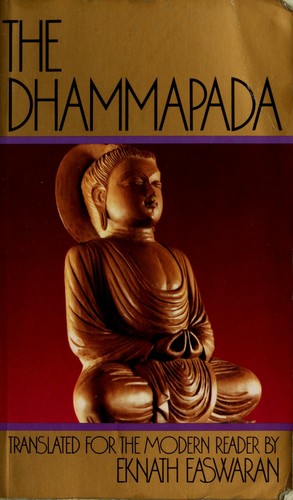
BookEknath Easwaran
Easwaran translates and introduces a widely read collection of verses on mind, conduct, attention, and liberation attributed to the Buddha.
BookGary R. Renard
Gary Renard presents conversations he says occurred with two ascended masters who appeared in his home and taught a metaphysical interpretation of A Course in Miracles. The book describes the world as a projection of a split mind, emphasizes forgiveness as release from perception, interprets Jesus and the crucifixion nontraditionally, and frames awakening as remembering a nondual reality beyond bodies, time, guilt, and separation.
BookPierre Teilhard de Chardin
Teilhard interprets work, passivity, matter, evolution, and ordinary action within a world becoming transparent to divine presence.
BookThomas Metzinger
A philosopher argues that the experienced self is a transparent model generated by the brain rather than an entity perceived directly.
Ilia Delio
Franciscan theologian Ilia Delio brings Teilhard de Chardin, evolution, cosmology, consciousness, technology, and Christian mysticism into a vision of the emergent Christ. She presents creation as unfinished and relational, with Christ naming divine presence drawing the cosmos toward greater unity and love. Christian life therefore participates in evolution through creative action rather than waiting for salvation to arrive from outside matter and history.
BookAdyashanti
Adyashanti addresses what may happen after a nondual opening or awakening experience: disorientation, loss of familiar identity, unfinished psychological material, relationship changes, embodiment, and the gap between a temporary glimpse and stable integration. The book assumes some prior experiential recognition rather than introducing meditation from the beginning.
Sofia Carozza; The Catholic Scientist
A Catholic scientific conversation holds neural evidence and personhood claims in productive tension. This exact conversation earns inclusion because the audio mode performs work a parallel book entry would not.
Jack Symes; Andrew Horton; Oliver Marley; Rose de Castellane; Gregory Mill
Sam Coleman links pantheism, personal identity and consciousness closely enough for the assumptions to be tested rather than admired vaguely. This exact object earns inclusion because hearing the exchange performs work the 574-book shelf cannot supply as directly.
BookJalal al-Din Rumi; Coleman Barks
Coleman Barks presents free English renderings of Rumi’s mystical poetry about love, longing, bewilderment, and union.
David Robson
Science writer David Robson explores how expectations can shape perception, stress responses, performance, habits, symptoms, and behavior. The book offers a lively account of real mind-body effects while repeatedly distinguishing them from the idea that belief can produce any desired external result.
Andy Clark
Philosopher and cognitive scientist Andy Clark explains the brain as an active prediction system rather than a passive recorder. Perception, action, expectation, and the body's signals work together as the brain continually anticipates what is happening and corrects itself when the world pushes back.
BookRanya Idliby, Suzanne Oliver & Priscilla Warner
Ranya Idliby, Suzanne Oliver, and Priscilla Warner recount an interfaith friendship among a Muslim, Christian, and Jew formed after September 11. Their conversations move through God, Scripture, prayer, Jesus, Muhammad, Israel and Palestine, antisemitism, Islamophobia, stereotypes, family, holidays, and the pressures of representing traditions while maintaining affection through real disagreement.
BookChristof Koch
A neuroscientist presents integrated information theory and argues that consciousness corresponds to intrinsic causal structure.
BookAntonio Damasio
A neurologist develops a layered account of emotion, feeling, core consciousness, and autobiographical self.
BookLesley Hazleton
Lesley Hazleton tells the life of Muhammad in the world of seventh-century Arabia, following his early vulnerability, call to prophecy, opposition in Mecca, migration to Medina, community leadership, conflict, and death. She writes for general readers and tries to make the human drama understandable without reducing Muhammad to either a flawless icon or a hostile stereotype.
Raghunath Cappo; Kaustubha Das
Kabir’s poem and a community death let Bhakti devotion, grief and ordinary sangha life be heard from inside. This exact object earns inclusion because hearing the exchange performs work the 574-book shelf cannot supply as directly.
BookRupert Gethin
A university-level introduction to Buddhist history, doctrine, cosmology, meditation, ethics, and traditions.
BookPhilip Goff
An analytic philosopher argues that physical science describes structure and behavior while leaving intrinsic conscious nature unexplained, motivating panpsychism.
BookAbraham Joshua Heschel
Heschel develops wonder, revelation, mitzvah, prophecy, and the claim that religion begins with God’s search for humanity.
Jay Michaelson
Jay Michaelson brings Jewish texts and mystical ideas into conversation with mindfulness and embodied practice, exploring eating, sexuality, movement, breath, and physical awareness as possible sites of spiritual life. The book resists treating the body as an obstacle to holiness.
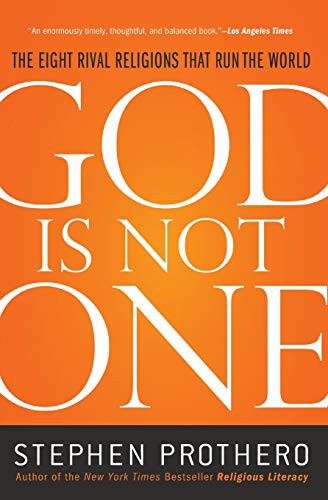
BookStephen Prothero
Stephen Prothero introduces eight religious traditions by emphasizing the different human problems they diagnose, the goals they seek, and the practices or paths they commend. His central argument is that treating religions as different routes up one mountain erases consequential differences in doctrine, ritual, history, and aspiration.
BookVine Deloria Jr.
Standing Rock Sioux scholar Vine Deloria Jr. contrasts Indigenous land-based religious worlds with Western Christianity's emphasis on universal history, mission, and doctrinal authority. He examines colonialism, sacred place, revelation, time, ecological relation, and the political consequences of a religion that claimed the right to displace peoples and overwrite their worlds.
BookCynthia Bourgeault
A deeper account of centering prayer as transformation of consciousness rather than only a relaxation or devotional technique.
BookSeyyed Hossein Nasr
Seyyed Hossein Nasr presents Islam from within its sacred, intellectual, legal, ethical, and spiritual traditions. Addressing revelation, the Qur'an, Muhammad, divine law, human responsibility, beauty, pluralism, jihad, peace, and relations with the West, he argues that Islam's enduring center is surrender to God and a civilization ordered toward the sacred rather than the political images that dominate public debate.
BookThich Nhat Hanh
Thích Nhất Hạnh presents central Buddhist teachings—including the Four Noble Truths, the Noble Eightfold Path, the Three Dharma Seals, the Three Doors of Liberation, and the Seven Factors of Awakening—as interlocking ways of understanding suffering and cultivating compassion, joy, and freedom. Written from his Vietnamese Thiền and Plum Village lineage, the book connects doctrine to mindfulness practice and ordinary life.
Podcast EpisodeVaradaraja V. Raman with Krista Tippett
Physicist Varadaraja V. Raman offers a Hindu view of knowledge, wonder, ritual, and the different questions that science and religion can ask.
BookSarah Hurwitz
Sarah Hurwitz combines memoir with an inviting exploration of Jewish theology, ethics, prayer, holidays, texts, community, and approaches to God. Beginning from her own surprise at discovering a Judaism more intellectually and spiritually expansive than the version she had absorbed growing up, she introduces classical sources and contemporary practices as material for adult questioning rather than a list of ethnic customs.
BookMark Solms
A neuropsychologist argues that feeling and homeostatic regulation, not cortical cognition, are the foundation of consciousness.
Showing 60 of 145 resources.