An Alternative Orthodoxy with Brian McLaren
Drew Jackson; Corey Wayne; Brian McLaren
Introduces an inhabitable alternative orthodoxy through conversation at much lower commitment than a theology book.
THE LIBRARY · 662 BOOKS · 232 PODCASTS & EPISODES · 47 COMMUNITIES & DESTINATIONS · 10 MAPS
121 matching resources
Drew Jackson; Corey Wayne; Brian McLaren
Introduces an inhabitable alternative orthodoxy through conversation at much lower commitment than a theology book.
Data Over Dogma
Examines what biblical texts call angels and demons and contrasts those texts with later popular images.
BookRobert Alter
A landmark demonstration of how Hebrew Bible stories create meaning through repetition, dialogue, type-scenes, and narrative craft.
N. T. Wright; hosts
Ask N.T. Wright Anything earns a place as traditional but non-fundamentalist New Testament theology; its recurring Q&A format gives listeners an ongoing way into Jesus and resurrection.
BookKathryn Schulz
Journalist Kathryn Schulz explores error as a basic human condition whose defining feature is that being wrong usually feels exactly like being right—until the moment a belief breaks against reality. Moving through philosophy, psychology, memory, perception, politics, love, grief, and comic failure, she examines why certainty is seductive, why error threatens identity, and how fallibility can produce curiosity, revision, empathy, and surprise.
BookMichael Shermer
A popular account of pattern detection, motivated reasoning, and how people form and defend beliefs.
Marty Solomon; Brent Billings
BookGregory A. Boyd
Boyd distinguishes relational trust in God from psychological certainty about doctrines and interpretations.
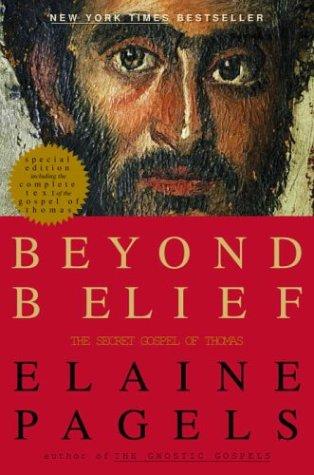
BookElaine Pagels
Historian Elaine Pagels uses the Gospel of Thomas and conflicts among early Christians to explore how competing understandings of Jesus, revelation, authority, resurrection, and spiritual knowledge were narrowed as canon, creed, and episcopal structures developed. Personal reflection appears beside accessible historical narrative.
BookRobert A. J. Gagnon
Robert A. J. Gagnon makes a long, detailed traditionalist case that biblical texts consistently reject same-sex relationships. He examines ancient context, creation, Israel’s laws and stories, Jesus, Paul, and the larger question of how Scripture should guide Christian ethics. The book became a major academic reference for the conservative side of this debate.
Marc Zvi Brettler, Peter Enns, and Daniel J. Harrington
Three biblical scholars—a Jew, a Protestant, and a Catholic—describe how their communities can receive scripture religiously while also using historical and literary criticism. Their essays clarify where the traditions share problems, where their interpretive authorities differ, and how each author personally negotiates tensions between inherited belief and modern scholarship.
Joel M. Hoffman
Biblical linguist Joel Hoffman examines forty familiar claims that he believes depend on mistranslation, missing cultural context, or later assumptions imposed on the text. Written for nonspecialists, the examples show why knowing what English words appear on a page is not always the same as understanding what an ancient Hebrew or Greek text communicates.
Pete Enns; Jared Byas
The Bible for Normal People earns a place as progressive/post-evangelical Christian biblical scholarship; its recurring interview; teaching format gives listeners an ongoing way into Bible and deconstruction.
Theron D. Williams
A pastor’s accessible argument for recognizing Africa and Black presence within biblical geography, genealogy, and interpretation.
BookChristian Smith
A sociologist’s critique of biblicism from inside evangelical Christianity and an argument for a more Christ-centered authority.
BookPeter Enns
Biblical scholar Peter Enns argues that the Bible’s diversity, ancient cosmology, morally troubling narratives, and internal tensions are features readers must engage rather than problems to conceal. Using Israel’s stories, wisdom literature, the Gospels, and Paul, he challenges modern expectations of error-free factual reporting and proposes a Scripture shaped by ancient human authors through whom communities continue wrestling with God.
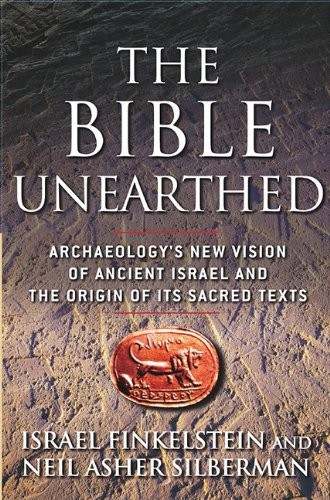
BookIsrael Finkelstein and Neil Asher Silberman
Archaeologist Israel Finkelstein and historian Neil Asher Silberman compare the Bible’s stories about ancient Israel with evidence found in the ground. They argue that many foundational stories took written shape much later than the events they describe and reflect the concerns of the kingdom of Judah. The book shows how archaeology can change the way readers understand the patriarchs, Exodus, conquest, David, Solomon, and the Bible’s formation.
Amy-Jill Levine and Marc Zvi Brettler
Amy-Jill Levine and Marc Zvi Brettler examine passages from Israel's Scriptures that Christians have read in relation to Jesus, including creation, exodus, prophecy, suffering, messiah, and resurrection. For each, they place the Hebrew Bible's historical and literary meanings beside later Jewish interpretation and New Testament or Christian rereading, showing both genuine continuity and consequential difference.
BookKaren Armstrong
Karen Armstrong follows the Bible as a changing collection of texts interpreted by Jewish and Christian communities across centuries. Rather than offering a chapter-by-chapter guide, she emphasizes how worship, politics, scholarship, printing, reform, modern criticism, and changing ideas of authority have repeatedly shaped what readers believed the Bible was and how it should be used.
John Riches
Biblical scholar John Riches introduces the Bible's varied writings, the worlds in which they arose, the formation of Jewish and Christian scriptures, and the many ways these texts have shaped—and been reshaped by—later cultures. The second edition also attends to newer scholarship and the Bible's continuing political and global influence.
Helen Bond; Lloyd Llewellyn-Jones
Working historians make current biblical scholarship approachable without pretending historical method resolves theology.
BookScot McKnight
Scot McKnight argues that Christians do not simply read and obey the Bible without interpreting it. Every church follows some teachings directly, adapts others, and decides how Scripture’s story speaks in a different time. Using women in church leadership as his main example, he invites evangelical readers to make that process more honest and thoughtful.
Podcast ShowBrian Lehrer
Peter Enns
Peter Enns uses memoir, biblical scholarship, humor, and constructive theology to describe faith after inherited explanations of God and Scripture stop accounting for lived experience. Rather than resolving each disruption, he explores how unexpected turns can expose the limits of a tightly managed God and open a less certain, more spacious Christian trust. The book gathers themes from Enns's earlier work into a personal account of change rather than a systematic theology.
Podcast ShowDaniel McClellan; Daniel Beecher
Pairs a Bible scholar with an atheist co-host to expose what texts say, what later traditions add, and why the distinction matters in ordinary life.
Tom Nichols
Nichols examines distrust of expertise, information abundance, and the civic consequences of treating informed judgment as merely another opinion.
Podcast EpisodeKerry Campbell
Fills a Catholic-specific recognition gap in a compact solo episode.
Sway; Jonathan; Caro
Adds culturally situated recognition missing from the white ex-evangelical default.
Data Over Dogma
Traces biblical demon language while asking how supernatural explanations can become harmful when applied to mental distress.
BookCarl Sagan; Ann Druyan
Astronomer Carl Sagan, with Ann Druyan, defends scientific skepticism as a public discipline for distinguishing well-supported claims from error, fraud, and wishful thinking. Through discussions of UFOs, alien abduction, pseudoscience, education, media, and the history of scientific inquiry, the book develops a ‘baloney detection kit’ while arguing that wonder and rigorous doubt need not be enemies.
John H. Walton and J. Harvey Walton
Examines biblical language about demons and spirits within its ancient cultural and literary worlds rather than using the texts as a direct catalogue of invisible beings.
Misquoting Jesus with Bart Ehrman
Explores how biblical and later Christian ideas about demons, ghosts, and Satan developed rather than appearing as one unchanged system.
Wilkie Au; Noreen Cannon Au
The authors integrate Ignatian discernment with psychological insight about desire, freedom, attachment, and inner conflict.
BookPriscilla Shirer
Shirer presents a conservative evangelical approach to recognizing divine guidance through Scripture, prayer, obedience, and attentiveness.
BookHenri J. M. Nouwen
Drawn from Henri Nouwen’s writings and course materials after his death, this volume presents Christian discernment as sustained attention to God through Scripture, prayer, community, desire, memory, relationships, suffering, and events. Rather than promise a private code for extracting divine instructions, it asks readers to notice recurring interior movements and to interpret a life’s direction within practices of patience, gratitude, compassion, and faithful action.
Podcast EpisodeDaniel McClellan; Daniel Beecher
A concrete case study in reading ancient cosmology on its own terms rather than forcing a modern scientific model into the text.
BookJennifer Michael Hecht
A wide-ranging history of religious doubt, skepticism, and dissent across ancient and modern cultures.
Exodus Brothers: Deconstruction & Healing
A former megachurch pastor describes preaching through doubt, vocational loss and purpose after certainty. This exact conversation earns inclusion because the audio mode performs work a parallel book entry would not.
BookPaul Tillich
A concise account of faith as ultimate concern, including doubt as an element within faith rather than its opposite.
Rhett McLaughlin; Link Neal
Pete Enns; Jared Byas; Pamela Eisenbaum
Creates conceptual room around salvation without presenting departure or reconstruction as the required destination.
Pete Enns; Jared Byas; Cameron B. R. Howard
Offers one bounded, transcript-verified reframing of authority without demanding either abandonment or certainty.
Podcast EpisodePete Enns; Jared Byas; Sarah Bessey
The relational voice supplies low-cognitive-load permission and companionship that a doctrinal book cannot.
Podcast EpisodePete Enns; Jared Byas; Yolanda Pierce
Corrects false neutrality while showing that critical study can deepen or unsettle faith without prescribing one outcome.
William Kingdon Clifford
Clifford’s essays argue that people bear moral responsibility for how they form beliefs, especially when credulity can affect others.
Podcast ShowRobert Perry; Emily Bennington
Blake Chastain
BookBrian D. McLaren
Brian McLaren describes doubt as a possible passage through changing forms of faith rather than the simple loss of belief. Using a four-stage framework—simplicity, complexity, perplexity, and harmony—alongside personal stories, he explores how inherited certainty can fail, why deconstruction can feel lonely, and what a more flexible, compassionate, justice-oriented faith might become afterward.
Pete Enns; Jared Byas
Faith for Normal People earns a place as progressive Christian faith reconstruction; its recurring interview; reflection format gives listeners an ongoing way into doubt and reconstruction.
BookRachel Held Evans
Evans recounts growing up in an apologetics-centered evangelical world where faithful questions were expected to have defensible answers, then follows the questions that unsettled that system. Evolution, biblical interpretation, religious pluralism, gender, politics, and the problem of suffering become parts of a lived transition toward a more progressive Christianity in which uncertainty is no longer treated as faith's opposite.
BookSøren Kierkegaard
A pseudonymous meditation on Abraham, faith, ethics, and the terrifying ambiguity of religious obedience.
BookMarcus J. Borg and John Dominic Crossan
A reconstruction of Paul that distinguishes radical, conservative, and reactionary Pauline voices within the New Testament.
BookMatthew J. Lynch
An accessible guide to violent portrayals of God in the Hebrew Bible that neither dismisses the texts nor explains away their moral difficulty.
Sway; Jonathan; Caro
Life Beyond Belief
Hosts translate deconstruction, deconversion and decentering Christianity through their own lived distinctions. This exact conversation earns inclusion because the audio mode performs work a parallel book entry would not.
BookKaren L. King
King translates and studies the surviving Gospel of Mary, its manuscript gaps, theology, conflicts over authority, and place in early Christianity.
BookNorthrop Frye
A literary critic maps the Bible’s myths, metaphors, and narrative architecture as a shaping grammar of Western imagination.
John J. Collins
A university-level historical and literary introduction to the Hebrew Bible and its ancient contexts.
BookJohn Barton
Biblical scholar John Barton traces how the Bible’s writings emerged, were collected, and came to function as Scripture in Judaism and Christianity. He follows the story through composition, canon, interpretation, worship, and moral use. His larger point is that the Bible is not a simple blueprint for either faith; communities have always had to interpret it.
BookRegina Dawn Akers; Foundation for the Holy Spirit
Akers presents a metaphysical interpretation of the New Testament centered on oneness, surrender, willingness, acceptance, and releasing separation-based thought.
Showing 60 of 121 resources.