BookThe Art of Biblical Narrative
Robert Alter
A landmark demonstration of how Hebrew Bible stories create meaning through repetition, dialogue, type-scenes, and narrative craft.
THE LIBRARY · 662 BOOKS · 232 PODCASTS & EPISODES · 47 COMMUNITIES & DESTINATIONS · 10 MAPS
24 matching resources
BookRobert Alter
A landmark demonstration of how Hebrew Bible stories create meaning through repetition, dialogue, type-scenes, and narrative craft.
Amy-Jill Levine and Marc Zvi Brettler
Amy-Jill Levine and Marc Zvi Brettler examine passages from Israel's Scriptures that Christians have read in relation to Jesus, including creation, exodus, prophecy, suffering, messiah, and resurrection. For each, they place the Hebrew Bible's historical and literary meanings beside later Jewish interpretation and New Testament or Christian rereading, showing both genuine continuity and consequential difference.
BookDaniel C. Matt
Brief translated passages introduce Kabbalistic images of Ein Sof, creation, divine immanence, and human action.
BookAlan Morinis
An accessible introduction to Mussar, the Jewish discipline of cultivating soul traits through study, practice, and accountability.
BookAbraham Joshua Heschel
Heschel develops wonder, revelation, mitzvah, prophecy, and the claim that religion begins with God’s search for humanity.
Jay Michaelson
Jay Michaelson brings Jewish texts and mystical ideas into conversation with mindfulness and embodied practice, exploring eating, sexuality, movement, breath, and physical awareness as possible sites of spiritual life. The book resists treating the body as an obstacle to holiness.
Toba Spitzer
Rabbi Toba Spitzer asks what becomes possible when God is no longer imagined primarily as a powerful person above the world. Drawing from Jewish scripture and tradition, she explores metaphors such as Water, Voice, Fire, Rock, Cloud, Place, and Becoming, pairing them with practices for noticing sacred presence in ordinary life.
Bradley Shavit Artson
Rabbi Bradley Shavit Artson presents a Jewish form of process theology in which God is dynamically related to a genuinely changing world. God does not unilaterally control every event but participates, receives, responds, and calls creation toward greater possibility through relationship rather than coercion.
BookSarah Hurwitz
Sarah Hurwitz combines memoir with an inviting exploration of Jewish theology, ethics, prayer, holidays, texts, community, and approaches to God. Beginning from her own surprise at discovering a Judaism more intellectually and spiritually expansive than the version she had absorbed growing up, she introduces classical sources and contemporary practices as material for adult questioning rather than a list of ethnic customs.
BookGeza Vermes
A landmark reconstruction of Jesus within first-century Jewish charismatic and prophetic traditions.
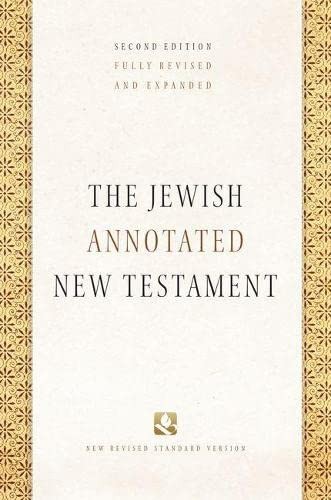
BookAmy-Jill Levine and Marc Zvi Brettler, editors
Edited by Jewish scholars Amy-Jill Levine and Marc Zvi Brettler, this study edition presents the New Testament with essays, annotations, maps, and historical context focused on its Jewish worlds and its reception. Contributors explain Jewish practices, texts, movements, and interpretive debates while identifying passages and later readings that have fostered anti-Judaism. The second edition expands engagement with Jewish–Christian relations and diverse Jewish contexts.
BookJoseph Telushkin
Telushkin offers a wide-ranging reference to Jewish texts, history, beliefs, practices, ethics, communities, and modern questions.
BookAdele Berlin and Marc Zvi Brettler, editors
The Tanakh presented with Jewish scholarly notes and essays that orient readers to Hebrew, history, interpretation, and Jewish reception.
Lawrence Kushner with Krista Tippett
Rabbi Lawrence Kushner introduces Kabbalah through everyday experience, wonder, repair, and the possibility that apparent fragmentation may conceal a deeper unity.
BookGershom Scholem
Scholem’s foundational lectures trace major movements in Jewish mysticism from Merkavah traditions through Hasidism.
BookKonrad Schmid and Jens Schröter
Biblical scholars Konrad Schmid and Jens Schröter describe the long, uneven processes by which Israelite and early Christian writings were composed, collected, revised, transmitted, and eventually treated as scripture. Their account places the Hebrew Bible and New Testament in related but distinct histories and shows that neither collection appeared all at once in its final form.
BookAbraham Joshua Heschel
Heschel develops a Jewish religious philosophy of wonder, the ineffable, divine concern, and humanity’s response to God.
BookAmy-Jill Levine
Jewish New Testament scholar Amy-Jill Levine restores Jesus to the Jewish world in which he taught, argued, worshiped, and interpreted Torah. She challenges Christian habits that make Jesus look humane by portraying Judaism as legalistic, purity-obsessed, misogynistic, or spiritually dead, while also asking Jewish readers to understand Jesus’ place in Western culture. The result joins historical correction with candid Jewish–Christian conversation.
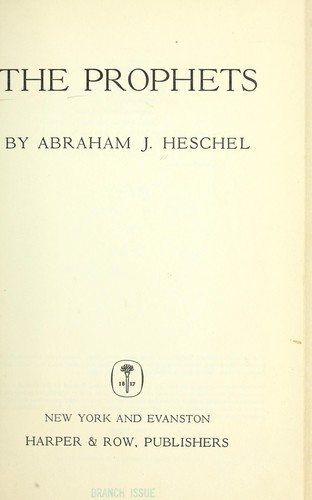
BookAbraham Joshua Heschel
A monumental Jewish study of prophetic consciousness, divine pathos, justice, and the moral life of biblical speech.
Podcast EpisodeJonathan Sacks with Krista Tippett
Jonathan Sacks connects faith in God with human dignity, covenant, difference, and the demanding practice of making room for the stranger.
BookAbraham Joshua Heschel
Abraham Joshua Heschel presents the Jewish Sabbath as a ‘palace in time’: a sacred rhythm through which people cease trying to master the world of space and learn to receive holiness, rest, delight, and presence. His poetic theological meditation joins biblical interpretation, rabbinic tradition, Jewish practice, and a critique of modern civilization's fixation on production and possession.
BookJudith Shulevitz
A Jewish-inflected history and memoir of Sabbath as resistance to endless work and as a communal architecture of time.
Amy-Jill Levine
Jewish New Testament scholar Amy-Jill Levine returns familiar parables to the social, economic, and religious world of their first Jewish hearers. She questions readings that reduce the stories to simple morals or make Jesus appear gracious by casting Judaism as legalistic, exclusionary, or spiritually inferior.
BookHarold S. Kushner
An accessible account of Jewish practices, festivals, ethics, community, and the sanctification of ordinary life.