THE INNER ATLASMy Shelf · 0
Menu

THE LIBRARY · 662 BOOKS · 232 PODCASTS & EPISODES · 47 COMMUNITIES & DESTINATIONS · 10 MAPS

What are you exploring?

Returning Differently shelf
Refine resultsFilters applied
Choose only what helps.
Topics
Topic choices
Perspectives
Perspective choices
Effort / Depth
Effort choices
Where Christianity fitsReturning Differently

Optional. Choose the closest fit for now.

Not sure? Find your shelf →

237 matching resources

Decorative; adjacent title and creator provide identity.Book
Book · L2 · Inner Atlas Reviewed

After Evangelicalism

David P. Gushee

David Gushee addresses readers who can no longer inhabit white American evangelicalism but have not necessarily abandoned Christianity. After diagnosing evangelical identity, authority, politics, and moral formation, he proposes a post-evangelical path organized around Jesus, the kingdom of God, Christian humanism, responsible interpretation, and a different public ethic. The book therefore moves beyond departure: it is a concise constructive proposal for what Christian faith might become afterward.

Christian — post-evangelical ethicsApproachable256 pages
Cover of After You Believe.Book
Book · L2 · Inner Atlas Reviewed

After You Believe

N. T. Wright

N. T. Wright presents Christian ethics as the formation of character for God’s promised new creation. Rejecting both rule-only morality and the idea that authentic action should simply feel spontaneous, he retrieves virtue language: repeated choices, communal practices, worship, Scripture, and the Spirit gradually form people able to act with wisdom. The Christian virtues of faith, hope, and love orient this training toward humanity’s vocation within renewed creation.

ChristianModerate320 pages
Cover of Anatheism: Returning to God After God.Book
Book · L2 · Inner Atlas Reviewed

Anatheism: Returning to God After God

Richard Kearney

Philosopher Richard Kearney proposes anatheism—a return to the question of God after both inherited theism and confident atheism have been disrupted. Through philosophy, biblical stories, literature, art, hospitality, and interreligious reflection, he explores encounters with the stranger in which the divine may be received again without restoring the sovereign, certain, or coercive God that critique has made untenable.

Christian — continental philosophical theologyDemanding272 pages
Cover of Belief in God in an Age of Science by John Polkinghorne.Book
Book · L2 · Inner Atlas Reviewed

Belief in God in an Age of Science

John Polkinghorne

Physicist and Anglican priest John Polkinghorne argues that science and theology are distinct but intellectually related searches for truth. Drawing on the intelligibility and relational structure of the physical world, quantum theory, cosmology, divine action, and critical realism, he proposes that Christian belief can be rationally warranted without competing with scientific explanation or being reducible to a proof derived from nature.

Christian — Anglican physicist-theologianModerate133 pages
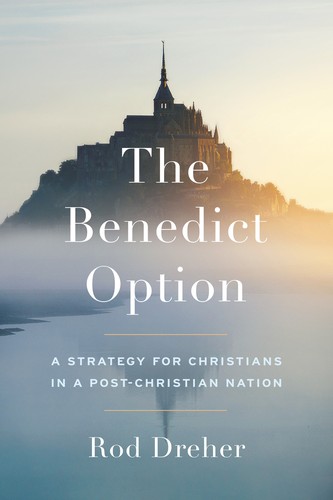
Cover of The Benedict Option by Rod DreherBook
Book · L2 · Inner Atlas Reviewed

The Benedict Option

Rod Dreher

Rod Dreher argues that Christians who hold traditional doctrines should respond to secularization not chiefly by winning elections but by building communities capable of sustaining belief and practice. Inspired loosely by Benedictine life, he urges thicker formation through worship, education, family, work, discipline, hospitality, and local institutions so that orthodox Christianity can endure what he sees as an increasingly hostile cultural environment.

ChristianModerate262 pages
Cover of The Bible and the Believer by Marc Zvi Brettler, Peter Enns, and Daniel J. Harrington.Book
Book · L2 · Inner Atlas Reviewed

The Bible and the Believer

Marc Zvi Brettler, Peter Enns, and Daniel J. Harrington

Three biblical scholars—a Jew, a Protestant, and a Catholic—describe how their communities can receive scripture religiously while also using historical and literary criticism. Their essays clarify where the traditions share problems, where their interpretive authorities differ, and how each author personally negotiates tensions between inherited belief and modern scholarship.

Jewish · Protestant · and Catholic — critical and religious readingModerate224 pages
Cover of The Bible, Disability, and the Church.Book
Book · L2 · Inner Atlas Reviewed

The Bible, Disability, and the Church

Amos Yong

Theologian Amos Yong develops a Christian theology of disability by bringing biblical interpretation, disability studies, Pentecostal experience, and ecclesiology into conversation. He revisits healing narratives, creation, the image of God, the body of Christ, hospitality, and the Spirit, challenging churches that define normalcy too narrowly or imagine disabled people chiefly as recipients of cure, care, or charitable ministry.

ChristianModerate176 pages
Cover of A Bigger Table by John PavlovitzBook
Book · L2 · Inner Atlas Reviewed

A Bigger Table

John Pavlovitz

John Pavlovitz draws on pastoral experience, personal stories, and the welcome he sees in Jesus to imagine Christian community around four practices: radical hospitality, total authenticity, messy diversity, and agenda-free relationship. The book is less a technical account of church structure than an accessible invitation to notice who receives a chair, who controls the guest list, and whether belonging is being offered as care or as a strategy for changing people.

Christian — progressive pastoralApproachable188 pages
Cover of Bodies and Souls, or Spirited Bodies? by Nancey MurphyBook
Book · L2 · Inner Atlas Reviewed

Bodies and Souls, or Spirited Bodies?

Nancey Murphy

Philosopher and theologian Nancey Murphy argues for ‘nonreductive physicalism’: human beings are wholly physical creatures whose complex capacities for reason, morality, relationship, and spirituality need not require an independently separable soul. Engaging neuroscience, philosophy of mind, biblical interpretation, and Christian theology, she asks how agency, identity, ethics, resurrection, and divine action can remain meaningful without substance dualism.

Christian — nonreductive physicalist theologyDemanding166 pages
Cover of Brown Church by Robert Chao RomeroBook
Book · L2 · Inner Atlas Reviewed

Brown Church

Robert Chao Romero

Historian Robert Chao Romero traces a five-hundred-year tradition of Latino Christian social justice across colonization, missions, labor, civil rights, immigration, and contemporary church life. He names this tradition Brown Church, centering figures, movements, and theologies through which Latina and Latino Christians have resisted racial hierarchy while drawing on Scripture, Catholic and Protestant faith, community memory, and public action.

Christian — liberation/contextualModerate248 pages
Decorative; adjacent title and creator provide identity.Book
Book · L2 · Inner Atlas Reviewed

Can a Scientist Believe in Miracles?

Ian Hutchinson

MIT nuclear scientist Ian Hutchinson answers questions students commonly ask about Christianity, science, evidence, miracles, natural law, prayer, consciousness, Genesis, evolution, and the resurrection. Written in a conversational question-and-response form, the book argues that modern science does not require scientism and that belief in divine action can be intellectually responsible when miracles are understood as unusual acts of God rather than violations caused by ignorance.

Christian — physicist and apologetic philosophyModerate288 pages
Cover of Changing Our Mind: Definitive 3rd Edition of the Landmark Call for Inclusion of LGBTQ Christians with Response to Critics by David P. Gushee.Book
Book · L2 · Inner Atlas Reviewed

Changing Our Mind: Definitive 3rd Edition of the Landmark Call for Inclusion of LGBTQ Christians with Response to Critics

David P. Gushee

Christian ethicist David Gushee narrates and defends his movement from traditional evangelical teaching toward full LGBTQ inclusion. He engages Scripture, sexual ethics, covenant, church practice, pastoral consequences, and responses from critics, presenting change as a matter of Christian discipleship rather than departure from biblical or ecclesial concern.

ChristianApproachable248 pages
Cover of Christ of the Celts by J. Philip NewellBook
Book · L2 · Inner Atlas Reviewed

Christ of the Celts

J. Philip Newell

Scottish theologian J. Philip Newell draws on Celtic Christian figures and themes to present Christ as the disclosure of a divine presence already woven through creation. Emphasizing John rather than separation, he explores incarnation, the sacredness of Earth, the goodness beneath distortion, contemplation, and reconciliation. The book invites a Christianity that listens for wisdom within nature and the human soul while remaining oriented toward Christ.

Christian — Celtic contemplative reconstructionApproachable128 pages
Cover of Christianity After Religion by Diana Butler BassBook
Book · L2 · Inner Atlas Reviewed

Christianity After Religion

Diana Butler Bass

Writing amid the early-2010s rise of religious disaffiliation, Diana Butler Bass interprets declining institutional loyalty alongside growing interest in experience, relationship, practice, and spiritual awakening. She places contemporary change within a broad history of American religious awakenings and asks whether Christianity might be moving from inherited patterns of believing, behaving, and belonging toward a more experiential form of faith.

Christian — mainline and progressive sociology of religionApproachable294 pages
Decorative; adjacent title and creator provide identity.Book
Book · L2 · Inner Atlas Reviewed

A Church Called Tov

Scot McKnight; Laura Barringer

New Testament scholar Scot McKnight and Laura Barringer describe how church cultures become toxic and contrast them with a ‘tov’ culture shaped by goodness, empathy, grace, truth, justice, service, and Christlike leadership. Using institutional patterns and the aftermath of abuse, they focus less on identifying a single bad leader than on the habits, incentives, loyalties, and silences that allow harm to be protected.

ChristianApproachable256 pages
Cover of Community and Growth by Jean VanierBook
Book · L3 · Deeply Mapped

Community and Growth

Jean Vanier

Jean Vanier reflects on communal life through the founding vision and daily experience of L’Arche, where people with and without intellectual disabilities share life. He writes about belonging, vulnerability, conflict, forgiveness, celebration, authority, growth, and the movement from idealism toward receiving actual people. The book’s spiritual account of community is now inseparable from documented findings that Vanier sexually abused and manipulated women.

ChristianModerate331 pages
Cover of The Cosmic Christ by Matthew Fox.Book
Book · L2 · Inner Atlas Reviewed

The Cosmic Christ

Matthew Fox

Creation-spirituality theologian Matthew Fox retrieves the ancient language of the cosmic Christ to describe divine presence filling creation rather than being confined to the historical Jesus or the institutional church. Drawing from Christian mysticism, art, science, Indigenous references, ecology, and justice, he argues that recovering creation’s sacredness can unite contemplation with prophetic resistance to anthropocentrism, oppression, and ecological destruction.

Christian — creation spiritualityModerate214 pages
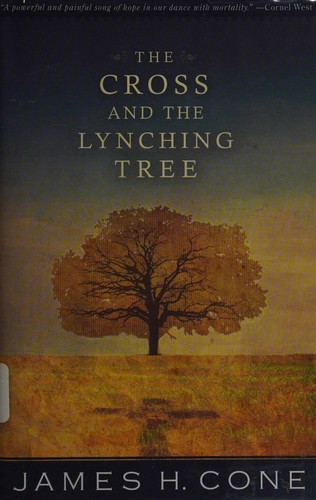
Cover of The Cross and the Lynching Tree by James H. ConeBook
Book · L2 · Inner Atlas Reviewed

The Cross and the Lynching Tree

James H. Cone

James H. Cone places the crucifixion of Jesus beside the lynching of Black Americans, arguing that the two symbols interpret one another and expose white Christianity's failure to confront racial terror. Through theology, history, spirituals, blues, literature, and the witness of figures including Ida B. Wells and Martin Luther King Jr., he asks what the cross can mean when Christians ignore crucified people.

Christian — liberation/contextualDemanding202 pages
Cover of Discernment.Book
Book · L2 · Inner Atlas Reviewed

Discernment

Henri J. M. Nouwen

Drawn from Henri Nouwen’s writings and course materials after his death, this volume presents Christian discernment as sustained attention to God through Scripture, prayer, community, desire, memory, relationships, suffering, and events. Rather than promise a private code for extracting divine instructions, it asks readers to notice recurring interior movements and to interpret a life’s direction within practices of patience, gratitude, compassion, and faithful action.

ChristianApproachable160 pages

Showing 60 of 237 resources.