THE INNER ATLASMy Shelf · 0
Menu

THE LIBRARY · 662 BOOKS · 232 PODCASTS & EPISODES · 47 COMMUNITIES & DESTINATIONS · 10 MAPS

What are you exploring?

Explore the whole Library
Refine results
Choose only what helps.
Topics
Topic choices
Perspectives
Perspective choices
Effort / Depth
Effort choices
Where Christianity fits

Optional. Choose the closest fit for now.

Not sure? Find your shelf →

58 matching resources

Cover of The Bible and Homosexual Practice by Robert A. J. GagnonBook
Book · L2 · Inner Atlas Reviewed

The Bible and Homosexual Practice

Robert A. J. Gagnon

Robert A. J. Gagnon makes a long, detailed traditionalist case that biblical texts consistently reject same-sex relationships. He examines ancient context, creation, Israel’s laws and stories, Jesus, Paul, and the larger question of how Scripture should guide Christian ethics. The book became a major academic reference for the conservative side of this debate.

Christian — traditional academic biblical ethicsSpecialist520 pages
Cover of The Bible and the Believer by Marc Zvi Brettler, Peter Enns, and Daniel J. Harrington.Book
Book · L2 · Inner Atlas Reviewed

The Bible and the Believer

Marc Zvi Brettler, Peter Enns, and Daniel J. Harrington

Three biblical scholars—a Jew, a Protestant, and a Catholic—describe how their communities can receive scripture religiously while also using historical and literary criticism. Their essays clarify where the traditions share problems, where their interpretive authorities differ, and how each author personally negotiates tensions between inherited belief and modern scholarship.

Jewish · Protestant · and Catholic — critical and religious readingModerate224 pages
Cover of The Bible Doesn't Say That by Joel M. Hoffman.Book
Book · L2 · Inner Atlas Reviewed

The Bible Doesn't Say That

Joel M. Hoffman

Biblical linguist Joel Hoffman examines forty familiar claims that he believes depend on mistranslation, missing cultural context, or later assumptions imposed on the text. Written for nonspecialists, the examples show why knowing what English words appear on a page is not always the same as understanding what an ancient Hebrew or Greek text communicates.

Academic — biblical languages and popular misconceptionsApproachable304 pages
Cover of The Bible Tells Me So by Peter Enns.Book
Book · L2 · Inner Atlas Reviewed

The Bible Tells Me So

Peter Enns

Biblical scholar Peter Enns argues that the Bible’s diversity, ancient cosmology, morally troubling narratives, and internal tensions are features readers must engage rather than problems to conceal. Using Israel’s stories, wisdom literature, the Gospels, and Paul, he challenges modern expectations of error-free factual reporting and proposes a Scripture shaped by ancient human authors through whom communities continue wrestling with God.

ChristianApproachable288 pages
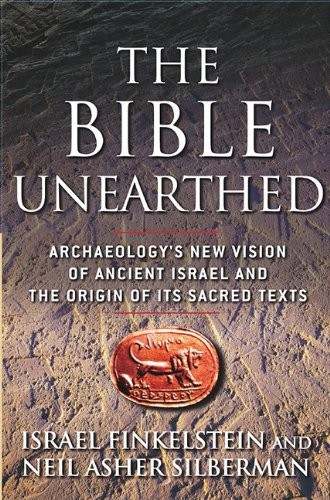
Cover of The Bible Unearthed by Israel Finkelstein and Neil Asher SilbermanBook
Book · L2 · Inner Atlas Reviewed

The Bible Unearthed

Israel Finkelstein and Neil Asher Silberman

Archaeologist Israel Finkelstein and historian Neil Asher Silberman compare the Bible’s stories about ancient Israel with evidence found in the ground. They argue that many foundational stories took written shape much later than the events they describe and reflect the concerns of the kingdom of Judah. The book shows how archaeology can change the way readers understand the patriarchs, Exodus, conquest, David, Solomon, and the Bible’s formation.

Psychological / Academic — archaeology and historyModerate400 pages
Cover of The Bible With and Without Jesus by Amy-Jill Levine and Marc Zvi Brettler.Book
Book · L2 · Inner Atlas Reviewed

The Bible With and Without Jesus

Amy-Jill Levine and Marc Zvi Brettler

Amy-Jill Levine and Marc Zvi Brettler examine passages from Israel's Scriptures that Christians have read in relation to Jesus, including creation, exodus, prophecy, suffering, messiah, and resurrection. For each, they place the Hebrew Bible's historical and literary meanings beside later Jewish interpretation and New Testament or Christian rereading, showing both genuine continuity and consequential difference.

JewishDemanding256 pages
Cover of The Bible: A Biography by Karen Armstrong.Book
Book · L2 · Inner Atlas Reviewed

The Bible: A Biography

Karen Armstrong

Karen Armstrong follows the Bible as a changing collection of texts interpreted by Jewish and Christian communities across centuries. Rather than offering a chapter-by-chapter guide, she emphasizes how worship, politics, scholarship, printing, reform, modern criticism, and changing ideas of authority have repeatedly shaped what readers believed the Bible was and how it should be used.

Cross-traditional — history of religionApproachable302 pages
Cover of The Bible: A Very Short Introduction by John Riches.Book
Book · L2 · Inner Atlas Reviewed

The Bible: A Very Short Introduction

John Riches

Biblical scholar John Riches introduces the Bible's varied writings, the worlds in which they arose, the formation of Jewish and Christian scriptures, and the many ways these texts have shaped—and been reshaped by—later cultures. The second edition also attends to newer scholarship and the Bible's continuing political and global influence.

Academic — biblical history · reception · and cultural influenceApproachable160 pages
Cover of How the Bible Actually Works by Peter Enns.Book
Book · L2 · Inner Atlas Reviewed

How the Bible Actually Works

Peter Enns

Enns presents the Bible as an ancient, ambiguous, and diverse collection that forms wisdom rather than delivering a timeless answer key. He moves through biblical examples to argue that interpretation has always required communities to reason, adapt, and imagine faithfully in new circumstances. The book offers Christians a positive account of Scripture after rulebook reading, rather than only a critique of inerrancy.

Christian — progressiveModerate240 pages
Cover of How to Read the Bible for All Its Worth by Gordon D. Fee and Douglas Stuart.Book
Book · L2 · Inner Atlas Reviewed

How to Read the Bible for All Its Worth

Gordon D. Fee and Douglas Stuart

Gordon Fee and Douglas Stuart teach readers to notice the different kinds of writing gathered in the Bible and to ask what a passage meant in its original literary and historical setting before applying it now. Chapters offer practical guidance for epistles, narratives, law, prophets, wisdom, psalms, Gospels, parables, and Revelation.

Christian — evangelical genre-sensitive interpretationApproachable304 pages
Cover of Inspired.Book
Book · L2 · Inner Atlas Reviewed

Inspired

Rachel Held Evans

Rachel Held Evans approaches the Bible as an ancient, diverse library of stories rather than a single flat instruction manual. Moving through origin, deliverance, war, wisdom, resistance, gospel, fish, and church stories, she pairs creative retellings with memoir and accessible scholarship to ask how Scripture can remain sacred, truthful, and morally engaging without literalism or denied contradictions.

Christian — progressive/post-evangelicalApproachable240 pages
Cover of The Making of the Bible by Konrad Schmid and Jens SchröterBook
Book · L2 · Inner Atlas Reviewed

The Making of the Bible

Konrad Schmid and Jens Schröter

Biblical scholars Konrad Schmid and Jens Schröter describe the long, uneven processes by which Israelite and early Christian writings were composed, collected, revised, transmitted, and eventually treated as scripture. Their account places the Hebrew Bible and New Testament in related but distinct histories and shows that neither collection appeared all at once in its final form.

Academic — Jewish and Christian canon formationDemanding448 pages
Cover of Misquoting Jesus.Book
Book · L2 · Inner Atlas Reviewed

Misquoting Jesus

Bart D. Ehrman

Bart D. Ehrman introduces New Testament textual criticism by following the handwritten manuscripts through which the text survived before printing. He explains copying practices, accidental and intentional changes, the number and kinds of variants, and the methods scholars use to compare witnesses and reconstruct earlier readings, while connecting the subject to his own loss of confidence in evangelical inerrancy.

Psychological/Academic — historical-criticalModerate256 pages
Cover of Reading the Bible Again for the First Time.Book
Book · L2 · Inner Atlas Reviewed

Reading the Bible Again for the First Time

Marcus J. Borg

Marcus Borg introduces a historical and metaphorical way of reading the Bible for people who can no longer treat every passage as a literal, inerrant report but still want Scripture to carry spiritual meaning. He addresses the Bible’s origin, authority, and interpretation, then reads central themes and texts through a progressive Christian understanding of God, Jesus, and transformation. The aim is not to reduce Scripture to ancient history, but to recover it as a humanly formed vessel through which the sacred may still be encountered.

Christian — progressive historical-criticalApproachable315 pages
Cover of Reading While Black.Book
Book · L2 · Inner Atlas Reviewed

Reading While Black

Esau McCaulley

Esau McCaulley develops what he calls Black ecclesial interpretation: a way of reading Scripture shaped by the historic Black church, committed to biblical authority, and alert to the text's resources for justice, dignity, and hope. Through studies of policing, political witness, anger, slavery, and identity, he argues against both readings that sanctify oppression and accounts that assume liberation requires abandoning the canon.

Christian — evangelical/traditionalModerate208 pages
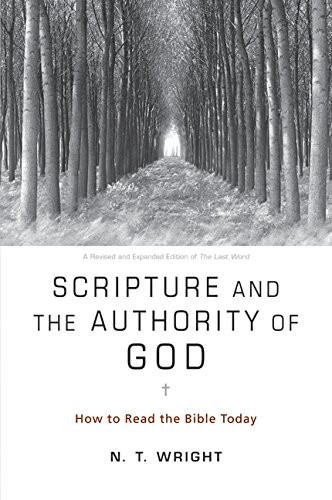
Cover of Scripture and the Authority of God by N. T. WrightBook
Book · L2 · Inner Atlas Reviewed

Scripture and the Authority of God

N. T. Wright

N. T. Wright argues that the Bible’s authority is really God’s authority exercised through Scripture—not the authority of a flat rulebook. He places the Bible within the larger Christian story of creation, Israel, Jesus, the Spirit, and the church’s mission. This allows him to defend strong biblical authority while explaining why faithful reading requires history, context, and judgment.

Christian — Anglican biblical theologyModerate224 pages
Cover of Texts of Terror by Phyllis TribleBook
Book · L2 · Inner Atlas Reviewed

Texts of Terror

Phyllis Trible

Phyllis Trible closely reads four biblical stories shaped by violence against women: Hagar, Tamar, the unnamed concubine in Judges 19, and Jephthah’s daughter. She pays attention to the words, silences, and ways interpreters have minimized what happens. Her readings serve as memorials to people whose suffering can disappear when readers feel obligated to defend the Bible.

Christian — feminist biblical scholarshipDemanding128 pages