THE INNER ATLASSaved · 0
Menu

THE LIBRARY · 663 BOOKS · 234 PODCASTS & EPISODES · 48 COMMUNITIES & DESTINATIONS · 10 MAPS955 resources · books, podcasts, communities, and maps

What are you exploring?

Science & Faith shelf
Refine results
Choose only what helps.
Effort / Depth
Effort choices
Where Christianity fits

Optional. Choose the closest fit for now.

Not sure? Find your shelf →
Perspectives
Perspective choices

28 matching resources

Cover of Autobiography of a Yogi.Book
Book · L2 · Inner Atlas Reviewed

Autobiography of a Yogi

Paramahansa Yogananda

Yogananda’s spiritual autobiography moves from his Bengali childhood and search for a guru through discipleship under Sri Yukteswar, encounters with saints and yogis, and his work establishing Kriya Yoga in the United States. Memoir, spiritual instruction, interreligious interpretation, and hagiographic wonder stories combine to present yoga as a path toward direct realization of God rather than primarily physical exercise.

Hindu / VedanticModerate349 pages
Cover of The Awakened Brain by Lisa Miller.Book
Book · L2 · Inner Atlas Reviewed

The Awakened Brain

Lisa Miller

Clinical psychologist Lisa Miller combines personal narrative with research on spirituality, development, depression, resilience, and the brain. She argues that a capacity for spiritual awareness is part of human life and that cultivating connection to something larger than the isolated self can support meaning and psychological well-being.

Clinical psychology and neuroscience — spirituality and resilienceApproachable288 pages
Cover of Belief in God in an Age of Science by John Polkinghorne.Book
Book · L2 · Inner Atlas Reviewed

Belief in God in an Age of Science

John Polkinghorne

Physicist and Anglican priest John Polkinghorne argues that science and theology are distinct but intellectually related searches for truth. Drawing on the intelligibility and relational structure of the physical world, quantum theory, cosmology, divine action, and critical realism, he proposes that Christian belief can be rationally warranted without competing with scientific explanation or being reducible to a proof derived from nature.

Christian — Anglican physicist-theologianModerate133 pages
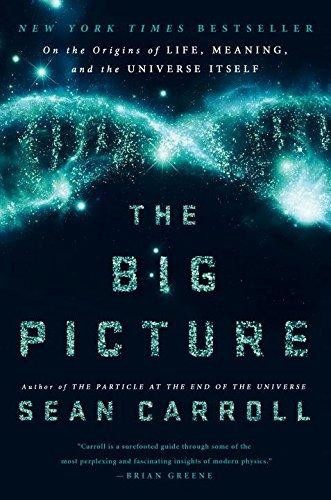
Cover of The Big Picture by Sean Carroll.Book
Book · L2 · Inner Atlas Reviewed

The Big Picture

Sean Carroll

Physicist Sean Carroll moves from quantum fields, cosmology, and emergence to life, consciousness, morality, and meaning. He calls his framework ‘poetic naturalism’: there is one natural world, but multiple vocabularies can truthfully describe its higher-level patterns. The book argues that purpose and value can be constructed and real for human beings without being written into the universe by a supernatural source.

Secular / HumanistModerate470 pages
Cover of Braiding Sweetgrass.Book
Book · L2 · Inner Atlas Reviewed

Braiding Sweetgrass

Robin Wall Kimmerer

Robin Wall Kimmerer braids botanical science, Citizen Potawatomi teachings, memoir, plant stories, and reflections on language, gratitude, reciprocity, gift, and responsibility. Rather than treating plants as passive resources, she invites readers to encounter them as teachers and relatives within living systems of exchange, while tracing the damage caused by extraction and settler colonialism.

Indigenous / Earth-honoring — Citizen PotawatomiApproachable408 pages
Decorative; adjacent title and creator provide identity.Book
Book · L2 · Inner Atlas Reviewed

Can a Scientist Believe in Miracles?

Ian Hutchinson

MIT nuclear scientist Ian Hutchinson answers questions students commonly ask about Christianity, science, evidence, miracles, natural law, prayer, consciousness, Genesis, evolution, and the resurrection. Written in a conversational question-and-response form, the book argues that modern science does not require scientism and that belief in divine action can be intellectually responsible when miracles are understood as unusual acts of God rather than violations caused by ignorance.

Christian — physicist and apologetic philosophyModerate288 pages
Cover of The Demon-Haunted World.Book
Book · L2 · Inner Atlas Reviewed

The Demon-Haunted World

Carl Sagan; Ann Druyan

Astronomer Carl Sagan, with Ann Druyan, defends scientific skepticism as a public discipline for distinguishing well-supported claims from error, fraud, and wishful thinking. Through discussions of UFOs, alien abduction, pseudoscience, education, media, and the history of scientific inquiry, the book develops a ‘baloney detection kit’ while arguing that wonder and rigorous doubt need not be enemies.

Secular / HumanistModerate480 pages
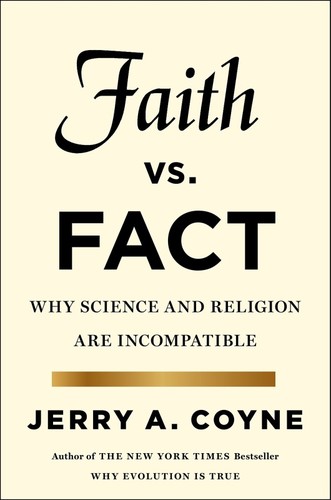
Cover of Faith Versus Fact by Jerry A. CoyneBook
Book · L2 · Inner Atlas Reviewed

Faith Versus Fact

Jerry A. Coyne

Evolutionary biologist Jerry A. Coyne argues that science and religion conflict not only over particular claims such as creation but over their methods for deciding what is true. He surveys evolution, cosmology, prayer, miracle claims, accommodationist arguments, and attempts to separate religious meaning from empirical fact, contending that faith permits confidence without proportionate evidence while science institutionalizes doubt, testing, and revision.

Secular / HumanistModerate336 pages
Cover of The Rocks Don't Lie by David R. MontgomeryBook
Book · L2 · Inner Atlas Reviewed

The Rocks Don't Lie

David R. Montgomery

Geomorphologist David Montgomery traces how geological evidence challenged attempts to explain Earth's landscapes through one recent global flood. He also explores flood traditions from multiple cultures and asks when stories may preserve memories of regional catastrophes, bringing field geology, history of science, archaeology, and biblical interpretation into conversation.

Psychological / AcademicApproachable302 pages
Decorative; adjacent title and creator provide identity.Book
Book · L2 · Inner Atlas Reviewed

The Varieties of Spiritual Experience

David B. Yaden; Andrew B. Newberg

David Yaden and Andrew Newberg update William James's classic inquiry with contemporary psychology and neuroscience. They distinguish types of spiritual experience, examine how such experiences arise and affect people, and separate the study of reported experience from conclusions about ultimate reality.

Psychology and neuroscience of religion — methodologically agnosticDemanding430 pages
Cover of Why Buddhism Is True by Robert Wright.Book
Book · L2 · Inner Atlas Reviewed

Why Buddhism Is True

Robert Wright

Robert Wright uses evolutionary psychology, cognitive science, personal meditation experience, and selected Buddhist teachings to examine craving, dissatisfaction, perception, no-self, and moral concern. He argues that natural selection shaped minds to pursue fitness rather than see reality impartially, and that mindfulness practice can expose some of these distortions and loosen their hold.

Secular / HumanistApproachable336 pages