THE INNER ATLASSaved · 0
Menu

CURATED SHELF GUIDE

Science & Faith

Science and faith are not single voices. Historians, scientists, theologians, skeptics, religious naturalists, and spiritual witnesses disagree not only about answers, but about what counts as evidence, explanation, and meaning.

Neither science nor faith is one thing. Ask what each voice is claiming, how it knows, and where its authority ends.

A selective starting shelf, not a complete bibliography of our holdings.

See paths

WANT A NARROWER PLACE TO BEGIN?

Choose the part of the question that feels closest.

A FEW PLACES YOU MIGHT BEGIN

A glimpse across the shelf.

See all resources gathered here →
Cover of Galileo Goes to Jail and Other Myths about Science and Religion.Book
Book · L2 · Inner Atlas Reviewed

Galileo Goes to Jail and Other Myths about Science and Religion

Ronald L. Numbers

Edited by Ronald Numbers, this collection tests twenty-five recurring claims about science and religion against historical evidence. Its distinctive value is showing that the relationship has been conflictual, cooperative, and entangled in ways slogans obscure.

Psychological / AcademicModerate320 pages

Why this may helpA historical myth-corrective showing that science and religion have been conflictual, cooperative, and entangled rather than locked in one timeless war.
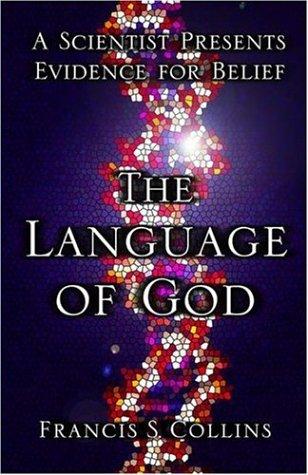
Cover of The Language of God by Francis S. Collins.Book
Book · L2 · Inner Atlas Reviewed

The Language of God

Francis S. Collins

Geneticist Francis S. Collins recounts his movement from atheism to Christian faith and argues that evolutionary science and belief in God need not be rivals. Drawing on cosmology, DNA, human genetics, and the evidence for common descent, he rejects young-earth creationism and intelligent-design arguments while proposing a theistic-evolutionary synthesis he calls BioLogos.

ChristianApproachable304 pages

Why this may helpA Christian geneticist’s accessible case for evolutionary creation, useful as a bridge rather than a final settlement.

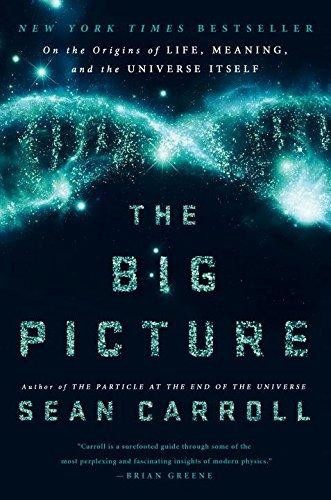
Cover of The Big Picture by Sean Carroll.Book
Book · L2 · Inner Atlas Reviewed

The Big Picture

Sean Carroll

Physicist Sean Carroll moves from quantum fields, cosmology, and emergence to life, consciousness, morality, and meaning. He calls his framework ‘poetic naturalism’: there is one natural world, but multiple vocabularies can truthfully describe its higher-level patterns. The book argues that purpose and value can be constructed and real for human beings without being written into the universe by a supernatural source.

Secular / HumanistModerate470 pages

Why this may helpA secular naturalist account of reality, purpose, and meaning that deserves to be encountered directly rather than through religious rebuttal.

Cover of Autobiography of a Yogi.Book
Book · L2 · Inner Atlas Reviewed

Autobiography of a Yogi

Paramahansa Yogananda

Yogananda’s spiritual autobiography moves from his Bengali childhood and search for a guru through discipleship under Sri Yukteswar, encounters with saints and yogis, and his work establishing Kriya Yoga in the United States. Memoir, spiritual instruction, interreligious interpretation, and hagiographic wonder stories combine to present yoga as a path toward direct realization of God rather than primarily physical exercise.

Hindu / VedanticModerate349 pages

Why this may helpAn influential Hindu and Yogic spiritual autobiography whose extraordinary claims widen the conversation without being presented as scientific proof.

PREFER A GUIDED WALK?

Kuhnian Paradigm Change

When the framework shaping evidence and explanation becomes part of the question.

A carefully bounded analogy from the history and philosophy of science. It can help reveal assumptions and rules of knowing, but it does not make every doubt a scientific revolution or make all frameworks equally true.

Enter the Map →

HOW TO READ THIS GUIDE

The doorways offer possible directions, not diagnoses or fixed stages. A resource may appear in more than one because a single work can help with more than one question. Placement signals possible usefulness, not endorsement of every conclusion. This guide is intentionally unfinished and may widen as useful resources are reviewed.