THE INNER ATLASMy Shelf · 0
Menu

THE LIBRARY · 662 BOOKS · 232 PODCASTS & EPISODES · 47 COMMUNITIES & DESTINATIONS · 10 MAPS

What are you exploring?

Explore the whole Library
Refine resultsFilters applied
Choose only what helps.
Topics
Topic choices
PerspectivesPsychological / Academic
Perspective choices
Effort / Depth
Effort choices
Where Christianity fits

Optional. Choose the closest fit for now.

Not sure? Find your shelf →

152 matching resources

Cover of After: A Doctor Explores What Near-Death Experiences Reveal about Life and Beyond by Bruce Greyson.Book
Book · L2 · Inner Atlas Reviewed

After: A Doctor Explores What Near-Death Experiences Reveal about Life and Beyond

Bruce Greyson

Psychiatrist Bruce Greyson reviews decades of research and clinical encounters involving near-death experiences, including recurring reports of leaving the body, altered time, light, beings, life review, peace, and lasting changes in values. He considers neurological, psychological, and survival interpretations while arguing that the reports deserve disciplined study rather than automatic dismissal.

Psychological / AcademicApproachable272 pages
Cover of The Awakened Brain by Lisa Miller.Book
Book · L2 · Inner Atlas Reviewed

The Awakened Brain

Lisa Miller

Clinical psychologist Lisa Miller combines personal narrative with research on spirituality, development, depression, resilience, and the brain. She argues that a capacity for spiritual awareness is part of human life and that cultivating connection to something larger than the isolated self can support meaning and psychological well-being.

Clinical psychology and neuroscience — spirituality and resilienceApproachable288 pages
Cover of Being Mortal by Atul Gawande.Book
Book · L2 · Inner Atlas Reviewed

Being Mortal

Atul Gawande

Surgeon and writer Atul Gawande examines how medicine, families, and institutions respond when cure is no longer possible and frailty makes independence harder to sustain. Through patients, clinicians, nursing homes, hospice programs, and his own father’s illness, he explores autonomy, safety, serious-illness conversations, assisted living, risk, caregiving, and the practical question of what makes life worth living near its end.

Psychological / Academic — medicine and ethicsApproachable248 pages
Cover of Being You.Book
Book · L2 · Inner Atlas Reviewed

Being You

Anil Seth

Neuroscientist Anil Seth explains consciousness through the brain's ongoing predictions about the world and the body. Perception, in his account, is a controlled construction constrained by sensory signals; the experienced self is likewise assembled through embodied processes rather than located in a single inner essence. He connects experiments, illusions, clinical cases, and theory while defending biological naturalism.

Psychological / AcademicModerate352 pages
Cover of Believing in Magic.Book
Book · L2 · Inner Atlas Reviewed

Believing in Magic

Stuart A. Vyse

Psychologist Stuart Vyse examines why intelligent people develop and retain superstitious beliefs and rituals. Drawing on research into learning, coincidence, uncertainty, control, cultural transmission, and cognitive bias, he explains how meaningful patterns can become convincing even when a causal connection has not been demonstrated. Astrology appears within a wider human landscape of divination, luck, ritual, and magical thinking.

Behavioral psychology — superstition · uncertainty · and perceived controlModerate336 pages
Cover of The Bible Doesn't Say That by Joel M. Hoffman.Book
Book · L2 · Inner Atlas Reviewed

The Bible Doesn't Say That

Joel M. Hoffman

Biblical linguist Joel Hoffman examines forty familiar claims that he believes depend on mistranslation, missing cultural context, or later assumptions imposed on the text. Written for nonspecialists, the examples show why knowing what English words appear on a page is not always the same as understanding what an ancient Hebrew or Greek text communicates.

Academic — biblical languages and popular misconceptionsApproachable304 pages
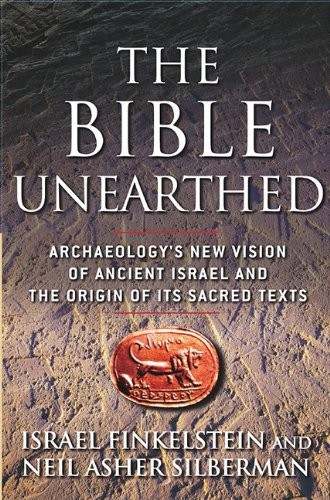
Cover of The Bible Unearthed by Israel Finkelstein and Neil Asher SilbermanBook
Book · L2 · Inner Atlas Reviewed

The Bible Unearthed

Israel Finkelstein and Neil Asher Silberman

Archaeologist Israel Finkelstein and historian Neil Asher Silberman compare the Bible’s stories about ancient Israel with evidence found in the ground. They argue that many foundational stories took written shape much later than the events they describe and reflect the concerns of the kingdom of Judah. The book shows how archaeology can change the way readers understand the patriarchs, Exodus, conquest, David, Solomon, and the Bible’s formation.

Psychological / Academic — archaeology and historyModerate400 pages
Cover of The Bible: A Very Short Introduction by John Riches.Book
Book · L2 · Inner Atlas Reviewed

The Bible: A Very Short Introduction

John Riches

Biblical scholar John Riches introduces the Bible's varied writings, the worlds in which they arose, the formation of Jewish and Christian scriptures, and the many ways these texts have shaped—and been reshaped by—later cultures. The second edition also attends to newer scholarship and the Bible's continuing political and global influence.

Academic — biblical history · reception · and cultural influenceApproachable160 pages
Cover of Black Disability Politics.Book
Book · L2 · Inner Atlas Reviewed

Black Disability Politics

Sami Schalk

Disability studies scholar Sami Schalk traces Black disability politics across the Black Panther Party and National Black Women’s Health Project, the National Black Disability Coalition, and contemporary Black disabled cultural activism. Using archival research, interviews, and cultural analysis, she shows how Black movements have addressed disability even without disability-rights language and how ableism, racism, gender, class, and state violence shape one another.

Psychological / academicDemanding224 pages
Cover of The Body Keeps the Score.Book
Book · L2 · Inner Atlas Reviewed

The Body Keeps the Score

Bessel van der Kolk

Psychiatrist Bessel van der Kolk surveys how overwhelming experience can alter memory, attention, bodily sensation, relationships, and the nervous system. Drawing on clinical cases, neuroscience, developmental research, and decades of trauma treatment, he explains why people may continue reacting to danger after an event has ended and discusses approaches ranging from relational therapy and EMDR to yoga, neurofeedback, theater, and body-based work.

Psychological / AcademicModerate464 pages
Cover of Caught in the Pulpit by Daniel C. Dennett & Linda LaScolaBook
Book · L2 · Inner Atlas Reviewed

Caught in the Pulpit

Daniel C. Dennett & Linda LaScola

Daniel Dennett and Linda LaScola report interviews with clergy who no longer believe important parts of what their roles require them to teach. Expanded from an initial pilot study, the book explores secrecy, vocational identity, financial dependence, family and congregational expectations, routes into ministry, and the difficult choices available to closeted or former nonbelieving clergy.

Psychological / academicDemanding280 pages
Cover of Come as You Are.Book
Book · L2 · Inner Atlas Reviewed

Come as You Are

Emily Nagoski

Sex educator Emily Nagoski explains sexual wellbeing through anatomy, the dual-control model of excitation and inhibition, stress, context, responsive desire, arousal nonconcordance, body image, and cultural messages. Her central argument is that variation is normal and that sexual response is shaped less by a universal drive than by the interaction between a person's system and the circumstances around it.

Psychological / AcademicApproachable400 pages
Cover of Consciousness: A Very Short Introduction by Susan Blackmore.Book
Book · L2 · Inner Atlas Reviewed

Consciousness: A Very Short Introduction

Susan Blackmore

Susan Blackmore offers a compact tour of the questions that make consciousness difficult: subjective experience, attention, the self, free will, altered states, and the relation between mind and brain. She introduces major experiments and theories while showing why even the word consciousness remains contested.

Cognitive science and philosophy — consciousness · self · and attentionApproachable160 pages
Cover of The Denial of Death.Book
Book · L2 · Inner Atlas Reviewed

The Denial of Death

Ernest Becker

Cultural anthropologist Ernest Becker argues that awareness of mortality creates an existential terror humans manage through symbolic worlds, heroic identities, social status, religion, romance, work, and imagined participation in something enduring. Drawing heavily on psychoanalysis, existential thought, anthropology, and Otto Rank, he interprets personality and culture as organized defenses against creatureliness, vulnerability, dependence, and death.
Psychological / Academic — existential psychologyDemanding315 pages
Cover of Evicted.Book
Book · L2 · Inner Atlas Reviewed

Evicted

Matthew Desmond

Sociologist Matthew Desmond follows eight Milwaukee families and their landlords through evictions, court dates, moves, unsafe housing, lost possessions, and repeated efforts to regain stability. Combining immersive ethnography with housing data and policy analysis, he argues that eviction is not merely a consequence of poverty: it actively produces poverty by disrupting employment, schooling, health, credit, relationships, and neighborhood life.

Psychological / AcademicApproachable448 pages
Decorative; adjacent title and creator provide identity.Book
Book · L2 · Inner Atlas Reviewed

The Exvangelicals

Sarah McCammon

Journalist Sarah McCammon combines her own story with reporting and interviews to examine the growing exvangelical movement. She explores how conservative white evangelicalism shaped people through faith, family, politics, gender, sexuality, fear, and belonging—and why many have begun to leave it. The book describes a social and personal movement more than it argues for a new theology.

Psychological / Academic — journalism and lived historyApproachable320 pages
Cover of God: An Anatomy.Book
Book · L2 · Inner Atlas Reviewed

God: An Anatomy

Francesca Stavrakopoulou

Biblical scholar Francesca Stavrakopoulou reconstructs the embodied deity of ancient Israel and Judah by attending to God’s feet, genitals, torso, arms, face, senses, voice, and bodily presence in temples and landscapes. Combining Hebrew Bible texts, ancient Near Eastern iconography, archaeology, inscriptions, and reception history, she argues that later Jewish and Christian abstractions often obscure how materially and anthropomorphically biblical authors imagined God.

Psychological / Academic — Hebrew Bible and ancient religionModerate608 pages

Showing 60 of 152 resources.