 Book
BookBook · L1 · Catalogued
Erasing Hell
Francis Chan
Chan and Sprinkle defend a serious, largely traditional evangelical account of final judgment while acknowledging interpretive difficulty and emotional resistance.
ChristianApproachable197 pages
THE LIBRARY · 662 BOOKS · 232 PODCASTS & EPISODES · 47 COMMUNITIES & DESTINATIONS · 10 MAPS951 resources · books, podcasts, communities, and maps
6 matching resources
BookFrancis Chan
Chan and Sprinkle defend a serious, largely traditional evangelical account of final judgment while acknowledging interpretive difficulty and emotional resistance.
 Book
BookJoseph Ratzinger
Ratzinger develops a Catholic theological account of death, resurrection, judgment, purgatory, heaven, and hell in dialogue with modern questions.
 Book
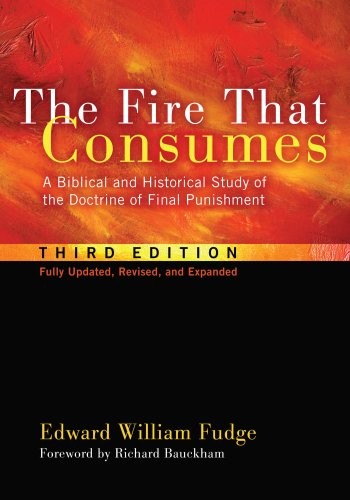
BookEdward William Fudge
Church of Christ scholar Edward Fudge conducts a biblical case for conditional immortality: the wicked finally perish rather than remain consciously tormented forever. Surveying Old and New Testament language concerning death, destruction, fire, Gehenna, judgment, resurrection, and immortality, he argues that traditional eternal-conscious-torment doctrine relies on assumptions about the immortal soul that the biblical texts do not require.
 Book
BookPreston Sprinkle, general editor; Denny Burk, John G. Stackhouse Jr., Robin A. Parry, Jerry L. Walls, contributors
A point-counterpoint volume presenting eternal conscious torment, conditional immortality, universalism, and purgatory, with responses among the contributors and an editorial evaluation.
 Book
BookThomas Talbott
Philosopher Thomas Talbott presents a Christian case for universal reconciliation grounded in God’s perfect love, human freedom, judgment, and the ultimate defeat of sin. Engaging biblical texts and philosophical objections, he argues that no person can remain eternally separated from God and that divine punishment must finally serve restoration. The book challenges both eternal torment and the claim that freedom requires the possibility of irreversible self-damnation.
 Book
BookDavid Bentley Hart
David Bentley Hart argues that eternal conscious torment is incompatible with Christian claims about God as the infinite Good, creation from nothing, rational freedom, and the final victory of divine love. Through biblical interpretation, patristic theology, moral reasoning, and metaphysics, he presents universal salvation not as a hopeful exception but as the only coherent completion of the Christian story.