 Book
BookBook · L1 · Catalogued
Broken Trust
F. Remy Diederich
Diederich offers a pastoral account of spiritual abuse and recovery, with attention to distorted authority, boundaries, and rebuilding trust.
ChristianApproachable256 pages
THE LIBRARY · 662 BOOKS · 232 PODCASTS & EPISODES · 47 COMMUNITIES & DESTINATIONS · 10 MAPS951 resources · books, podcasts, communities, and maps
19 matching resources
BookF. Remy Diederich
Diederich offers a pastoral account of spiritual abuse and recovery, with attention to distorted authority, boundaries, and rebuilding trust.
 Book
BookDaniel C. Dennett & Linda LaScola
Daniel Dennett and Linda LaScola report interviews with clergy who no longer believe important parts of what their roles require them to teach. Expanded from an initial pilot study, the book explores secrecy, vocational identity, financial dependence, family and congregational expectations, routes into ministry, and the difficult choices available to closeted or former nonbelieving clergy.
BookScot McKnight; Laura Barringer
New Testament scholar Scot McKnight and Laura Barringer describe how church cultures become toxic and contrast them with a ‘tov’ culture shaped by goodness, empathy, grace, truth, justice, service, and Christlike leadership. Using institutional patterns and the aftermath of abuse, they focus less on identifying a single bad leader than on the habits, incentives, loyalties, and silences that allow harm to be protected.
 Book
BookJosh Packard; Ashleigh Hope
Packard and Hope report on people who remain spiritually engaged while leaving congregational institutions they experience as constraining or ineffective.
BookJemar Tisby
Historian Jemar Tisby traces white Christian complicity in American racism from slavery and segregation through the civil-rights era and contemporary institutions. Written as a narrative history with an explicit Christian moral call, it shows how churches and leaders repeatedly chose compromise, silence, paternalism, or active support for racial hierarchy.
BookPeter Block
Consultant Peter Block proposes that community is produced through the structure of conversations rather than delivered by experts or heroic leaders. He emphasizes invitation, possibility, ownership, dissent, commitment, and gifts, using small-group questions to shift participants from deficiency and blame toward chosen accountability. The book applies an asset-based, facilitative approach to neighborhoods, civic life, organizations, and other gatherings.
Lenny Duncan
Lenny Duncan writes a love letter and prophetic manifesto to the Evangelical Lutheran Church in America and the wider white mainline church. Drawing on his life as a Black, queer Lutheran pastor, he confronts white supremacy, institutional self-protection, respectability, tokenism, policing, and the distance between public welcome and actual redistribution of power.
 Book
BookNancy L. Eiesland
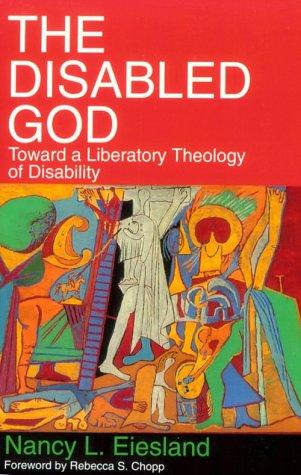
Nancy Eiesland's foundational disability theology begins with the image of the resurrected Christ as a disabled God whose wounds remain. Drawing on sociology, Christian theology, interviews, Eucharist, and disability activism, she critiques ideals of cure, passive suffering, inaccessible worship, and churches that treat disabled people only as recipients of care.
BookChrissy Stroop
Edited by Chrissy Stroop and Lauren O'Neal, this anthology presents multiple paths out of religious communities, including intellectual, moral, political, gendered, and traumatic rupture.
 Book
BookPhyllis Tickle
Religion writer Phyllis Tickle interprets contemporary Christian disruption through a recurring historical pattern: roughly every five centuries, inherited structures of authority are shaken, traditions reorganize, and new forms of faith emerge alongside altered older ones. She connects the present to the Great Reformation, the Great Schism, Gregory the Great’s era, and earlier upheavals, then describes an emerging networked Christianity less centered on denominational control.
 Book
BookKristin Kobes Du Mez
Kristin Kobes Du Mez traces how ideals of militant masculinity, patriarchal authority, nationalism, celebrity, and political power became central to much of white American evangelical culture. Moving through popular books, ministries, media figures, military imagery, scandals, and electoral politics, she argues that evangelical support for Donald Trump reflected a long formation rather than a sudden abandonment of stated values.
 Book
BookBarbara Brown Taylor
Barbara Brown Taylor recounts the arc of her life as an Episcopal parish priest: the beauty and intimacy of congregational ministry, the accumulating demands of being available to everyone, and the difficult recognition that a beloved calling had become unsustainable. Leaving parish leadership creates grief as well as room to recover limits, embodiment, teaching, and a less role-bound relationship with faith. This is a memoir of vocation changing, not a manifesto against church or Christianity.
 Book
BookDietrich Bonhoeffer
Written from the illegal seminary at Finkenwalde, Dietrich Bonhoeffer’s compact meditation describes Christian community through shared Scripture, psalm prayer, worship, ordinary work, listening, service, confession, and communion. Its governing warning is that a cherished dream of community can become an idol: love for an ideal fellowship may make people accusatory toward the actual, imperfect people given to one another.
 Book
BookAlan Kreider
Historian Alan Kreider argues that the early church’s growth before Constantine depended less on organized mission campaigns than on a ‘patient ferment’ of distinctive conduct, worship, teaching, and communal formation. Drawing on ancient Christian and non-Christian sources, he emphasizes patience as habitus: believers were slowly shaped into lives whose treatment of neighbors, money, violence, sexuality, and enemies made the community’s faith visible and attractive.
 Book
BookDiane Langberg
Psychologist Diane Langberg examines power as a capacity that operates through individuals, relationships, systems, and religious institutions. Drawing on decades of work with trauma and abuse, she considers deception, coercion, institutional loyalty, leadership, gender, and the tendency to protect a Christian organization or reputation while sacrificing people, then measures power against the self-giving pattern of Jesus.
 Book
BookRachel Held Evans
Rachel Held Evans organizes this memoir of leaving and returning to church around seven sacraments: baptism, confession, holy orders, communion, confirmation, anointing the sick, and marriage. Personal stories, reported visits to varied congregations, and reflections on Scripture become a search for Christian community spacious enough to hold doubt, grief, embodiment, and belonging without restoring the certainty she had outgrown.
 Book
BookWade Mullen
Researcher Wade Mullen examines the language and performance organizations use to hide abuse and preserve a positive identity. He identifies tactics such as impression management, strategic apologies, blame-shifting, flattering supporters, attacking critics, reframing victims as threats, and using carefully staged compassion to redirect attention away from conduct and accountability.
 Book
BookMegan Phelps-Roper
Megan Phelps-Roper traces how certainty, family love, social media encounters, and moral contradiction interacted in her departure from Westboro Baptist Church. It gives the leaving shelf a rare insider account of both belonging and rupture.
 Book
BookChuck DeGroat
Chuck DeGroat describes how charisma, shame, idealization, and organizational anxiety can reward narcissistic leadership, then discusses accountability and healing. It helps visitors name a system without reducing every harmful leader to a diagnosis.