INNER ATLAS MAP
Seeing how experience arises—and changes—through causes and conditions.
Buddhist Conditionality
Dependent origination / dependent arising · a foundational Buddhist teaching
An 8–11 minute walk
Enter the Map ↓01 · BEGIN WITH A SMALL SEQUENCE
A comment is heard. Something begins to happen.
A feeling arises. An urge to defend appears. A familiar story follows: They never respect me. A reply begins forming.
From inside the experience, it may feel like one thing: “I got angry.”
But look more closely and there is movement: contact, feeling, wanting, story, response. One thing conditions what becomes possible next.
This Map asks us to notice the sequence—not to deny the feeling, but to see where something that feels inevitable may actually depend on conditions.

Water does not move the same way everywhere. A leaf, channel, sediment, and slope each affect what follows.
This is only an entry analogy. The Buddhist teaching goes much further.
STAY WITH ONE DISTINCTION
Feeling is not yet craving.
Craving is not yet clinging.
What feels like one reaction may contain more than one movement.
02 · NAME THE MAP
Buddhist traditions call this “dependent arising”
Dependent arising (pratītyasamutpāda in Sanskrit; paṭiccasamuppāda in Pali) names a foundational Buddhist insight: what arises does so because particular causes and conditions are present. When those conditions change, what depends on them can change too.
This matters because Buddhism is concerned not only with how suffering arises, but with how suffering can cease.
Dependent arising is therefore more precise than saying “everything is connected.” The teaching asks us to notice which conditions give rise to what—and what happens when those conditions no longer operate.
03 · KEEP THE TRADITIONAL DISTINCTION
The doorway is simpler than the teaching.
The Inner Atlas began with a small sequence: something happens, a feeling arises, craving or resistance may follow, and a response takes shape. That can help us glimpse conditionality.
But Buddhist dependent arising goes further. It examines how ignorance, craving, and clinging participate in the arising of dukkha—and how suffering can cease. It belongs within Buddhist traditions of ethics, meditation, wisdom, karma, and, traditionally, rebirth.
This is not simply systems theory, a habit loop, “everything is connected,” or another name for nonduality.
04 · A HISTORICAL ANCHOR
Dependent arising has been carried and interpreted for centuries.
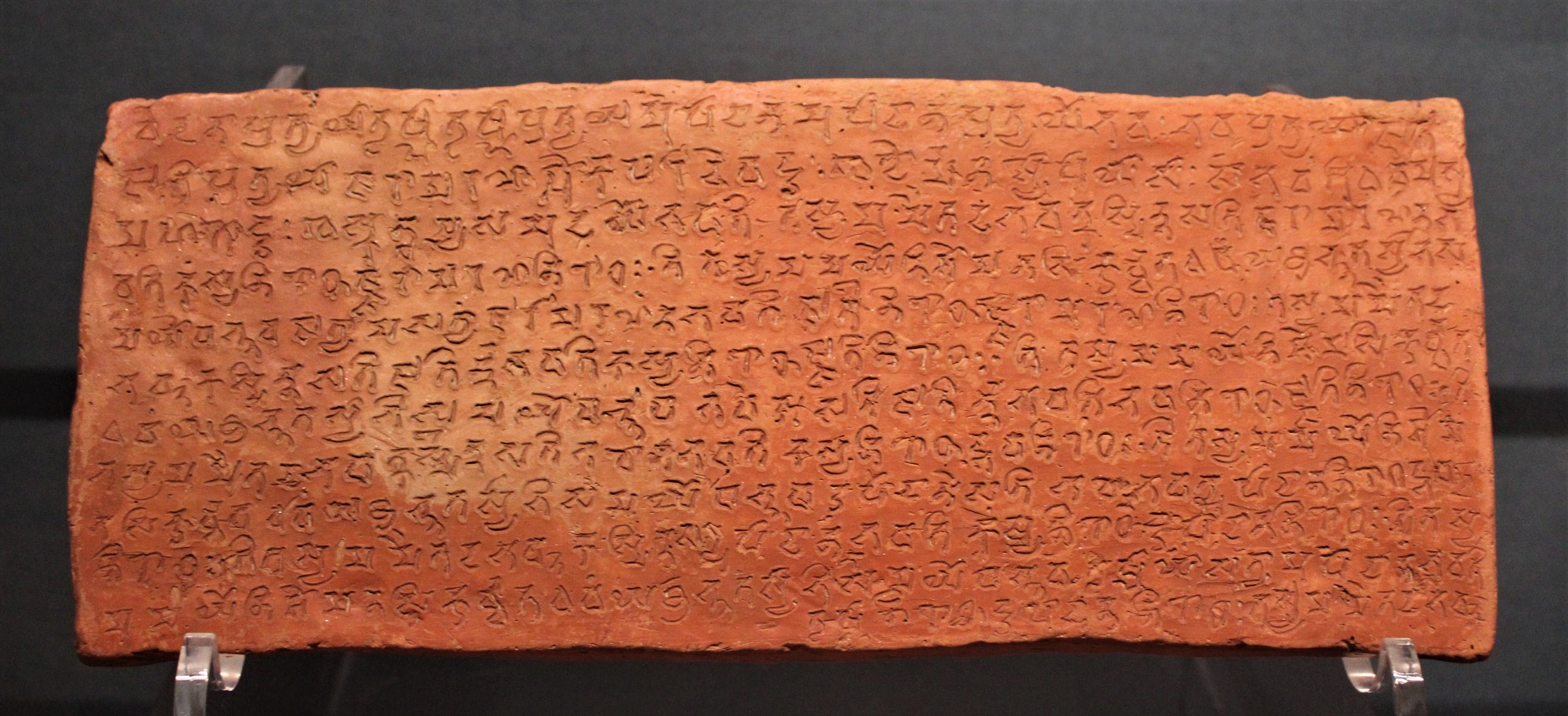
A terracotta brick from present-day Uttar Pradesh bears a Sanskrit dependent-origination verse—one material witness to the teaching’s long history within Buddhism. Found at Gopalpur in present-day Uttar Pradesh, India. Ashmolean Museum EAX.404.
Photograph © Zunkir, CC BY-SA 4.0, via Wikimedia Commons. Cropped for presentation.The object does not establish one universal Buddhist interpretation. It does make something concrete: dependent arising is not a modern wellness metaphor.
05 · THE CLASSIC TWELVE-LINK PRESENTATION
The traditional chain traces how dukkha arises—and how it can cease.
Early Buddhist discourses commonly present dependent arising through twelve linked conditions: ignorance → formations → consciousness → name-and-form → six sense bases → contact → feeling → craving → clinging → becoming → birth → aging-and-death, sorrow, and distress.
The point is not simply that one thing mechanically causes the next. Each arises dependently within conditions. The sequence can also be traced through cessation: when relevant conditions cease, what depends upon them can cease.
Buddhist traditions have interpreted the twelve links across moments, across a lifetime, and across multiple lives. There is no single uncontested modern interpretation that replaces those traditions.
Go deeper: impermanence, not-self, and emptiness
Impermanence (anicca): conditioned things change. Not-self (anattā): changing processes do not constitute a permanent, independent, fully controllable self. In many Mahāyāna traditions, dependent origination is developed in relation to emptiness (śūnyatā): things lack independent, inherent existence precisely because they arise dependently. These developments are not interchangeable with every Theravāda account of the twelve links.
06 · WALK ALONGSIDE
Sam is invented for this teaching experience.
Sam hears a painful comment.
Before Sam has decided what to do, heat rises in the body. Hurt appears. An urge to defend follows. Then a familiar story arrives: I am never respected here.
The story intensifies the hurt. Sam begins reaching for an old reply. What began as contact and feeling is becoming a familiar conflict.
Dependent arising invites a different kind of attention. Instead of treating the whole sequence as “my anger,” Sam can notice conditions and movements within it.
The original comment may still have been harmful. The hurt does not need to disappear. But feeling, craving, clinging, story, and response do not have to be treated as one inevitable event.

Something can be conditioned
without being chosen.
Something can be conditioned
without being inevitable.
07 · CESSATION MATTERS
Dependent arising is not only about how suffering begins.
The teaching also runs in the other direction. When relevant conditions cease, what depends on them can cease as well.
That is why dependent arising is more than an explanation of cause and effect. Within Buddhism, it belongs to a path of liberation: ethics, meditation, and wisdom are concerned with seeing conditions clearly and loosening those that sustain dukkha.
PAUSE · PRIVATE · OPTIONAL
Which conditions become more visible when you slow a familiar sequence down?No answer is required. Nothing is saved.
Where, if anywhere, does the sequence seem less inevitable than before?
08 · RETURN TO SAM
Precision can create room without creating blame.
Sam may begin to notice places where the familiar sequence can unfold differently. That does not mean Sam chose the original hurt, controls every condition, or is responsible for another person's behavior.
Nor does conditionality exist only “inside” Sam. Relationships, histories, bodies, environments, institutions, and other people's actions also create conditions.
What the Map offers is more modest: where experience first appeared fused—
They hurt me → I got angry → we fought
—Sam may now see several conditioned movements rather than one fixed reaction.
09 · BE MINDFUL OF THE EDGES
An accessible doorway can become a distortion if it replaces the teaching.
“Everything is connected” is too vague.
Dependent arising is more precise: particular conditions matter, dukkha matters, and cessation matters.
A habit loop is only an analogy.
Noticing feeling → craving → clinging in everyday experience can open the teaching. It does not reduce dependent arising to psychology or behavior change.
Conditionality does not erase responsibility or harm.
Seeing the conditions behind an action does not make every action acceptable, nor does it mean suffering is merely a person's reaction to circumstances.
LOOK THROUGH ANOTHER WINDOW
Different Maps ask different questions about what seems fixed.
analyzes conditioned arising and cessation within a Buddhist liberating path
asks us to notice how a sense of continuity is shaped through the stories we tell about ourselves.
These are not two versions of the same idea. Narrative identity examines an evolving sense of self. Buddhist traditions may question the assumption of a permanent, independent self more fundamentally.
WHAT TO CARRY FROM THIS WALK
Look for conditions—not a fixed essence.
What has arisen through conditions may not have to remain exactly as it is.
KEEP, COMPARE, OR SET ASIDE
You are free to put this map down.
Understanding the doorway does not require adopting the tradition or reducing the tradition to the doorway.