 Book
BookBook · L2 · Inner Atlas Reviewed
The Logic of Faith
Elizabeth Mattis Namgyel
A Buddhist account of faith as a way of meeting uncertainty and interdependence, rather than a demand for unquestioning belief.
BuddhistModerate
PATH 01 OF 08
Can I still have faith, but differently?
Faith can survive a change in its institutions. Buddhist, Muslim, pluralist, and Christian writers explore trust and practice without asking every traveler to return to the same home.
BookElizabeth Mattis Namgyel
A Buddhist account of faith as a way of meeting uncertainty and interdependence, rather than a demand for unquestioning belief.
 Book
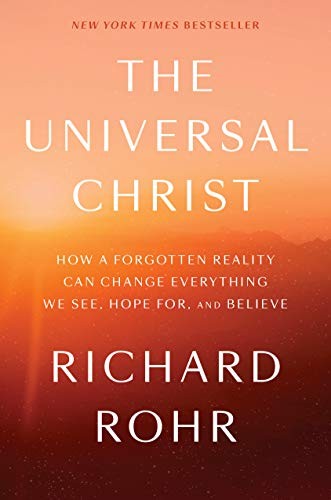
BookRichard Rohr
Richard Rohr distinguishes Jesus of Nazareth from ‘Christ’ as the eternal divine presence disclosed through creation, history, and every creature. Drawing on Christian Scripture, Franciscan spirituality, contemplation, incarnation, and nondual language, he proposes that Christ is not God's limited appearance in one place but the pattern of divine presence made visible in Jesus and present throughout reality.
BookDanté Stewart
Literary memoir and meditation tracing Black Pentecostal roots, white evangelical leadership, anti-Blackness, rupture, Jesus, Blackness, belonging, and spiritual reclamation.
BookStephen Batchelor
Short reflections on Buddhist doubt and the possibility that uncertainty can deepen practice.
BookEboo Patel
Patel recounts growing into Muslim faith and interfaith leadership, arguing for constructive relationships across religious differences.
BookDuane Bidwell
Explores the lived experience of people whose religious belonging or practice crosses tradition boundaries.
 Book
BookDiana Butler Bass
Diana Butler Bass traces a movement from imagining God primarily as a distant being ‘above’ the world toward encountering divine presence through ground, water, sky, home, neighborhood, and shared life. Blending history, reporting, memoir, and constructive theology, she interprets declining institutional affiliation alongside the growth of immanent, ecological, and place-rooted spiritual experience.
 Book
BookBrian D. McLaren
Brian McLaren describes doubt as a possible passage through changing forms of faith rather than the simple loss of belief. Using a four-stage framework—simplicity, complexity, perplexity, and harmony—alongside personal stories, he explores how inherited certainty can fail, why deconstruction can feel lonely, and what a more flexible, compassionate, justice-oriented faith might become afterward.