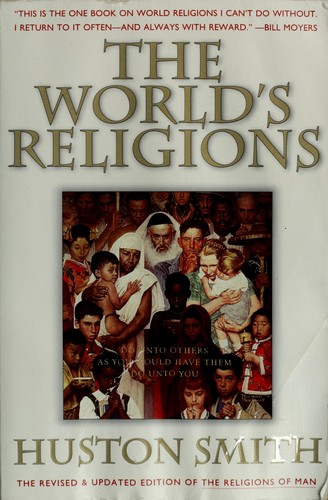
A LIBRARIAN’S ORIENTATION
What this book explores
Huston Smith introduces Hinduism, Buddhism, Confucianism, Taoism, Islam, Judaism, Christianity, and primal traditions by emphasizing the spiritual insights and existential questions he understands each to carry. His sympathetic, readable approach seeks the experiential center of traditions rather than cataloguing institutions, conflict, or exhaustive historical development.
EDITORIAL NOTE
Why it’s in the Library
It is included as an influential example of comparative religion written to awaken respect and curiosity. For Christian-origin travelers encountering religious plurality, Smith can make unfamiliar traditions feel intelligible without beginning from refutation. The book is most useful as a doorway into comparison—and as an opportunity to notice how even generous comparison selects, organizes, and sometimes idealizes what counts as a religion's essence.
Good starting place if…
You want an inviting first orientation to several major traditions and will use it to identify tradition-specific voices and sources for deeper exploration.
Know before you begin…
First published in 1958, the book reflects a perennialist ‘world religions’ model that privileges major traditions, emphasizes shared wisdom, and can understate internal diversity, politics, colonial history, lived practice, and contested authority. Smith's sympathetic portraits are interpretations, not each tradition speaking comprehensively for itself; pair them with current insider scholarship and primary sources.