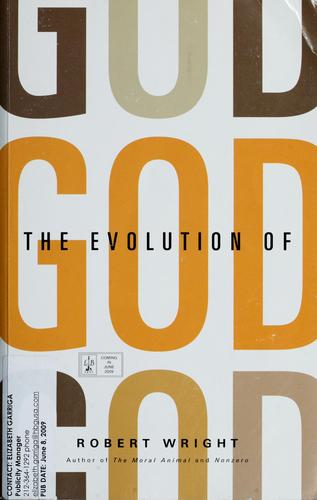
A LIBRARIAN’S ORIENTATION
What this book explores
Journalist Robert Wright traces changing concepts of gods and God from small-scale societies through ancient polytheisms, biblical Israel, Christianity, and Islam. Drawing on religious history, anthropology, textual scholarship, and game theory, he argues that material and political conditions shape theology and that expanding social interdependence can encourage morally wider conceptions of the divine, though neither history nor doctrine develops in a simple straight line.
EDITORIAL NOTE
Why it’s in the Library
This book gives travelers a large-scale naturalistic account of why ideas about God change rather than assuming doctrines arrived fully formed. Its emphasis on social conditions and non-zero-sum relationships can illuminate both moral expansion and theological conflict across traditions. It belongs as an ambitious synthesis that generates comparative questions about revelation, adaptation, and ethics. The Library does not treat its evolutionary narrative as a settled history or reduction of religion to utility.
Good starting place if…
You want a sweeping, readable account of how concepts of divinity may develop through social, political, and economic change across Jewish, Christian, Islamic, and earlier traditions.
Know before you begin…
The scale requires radical compression, and specialists dispute Wright’s reconstructions of early religion, biblical development, Islam, moral progress, and the explanatory reach of game theory. A pattern of adaptation does not by itself prove or disprove revelation. The language of evolution can imply a hierarchy among living traditions, while a progress story centered on monotheism may underrepresent Indigenous, Asian, African, and non-monotheistic worlds. Use it as a comparative thesis and verify particular periods with specialist scholarship.