A LIBRARIAN’S ORIENTATION
What this book explores
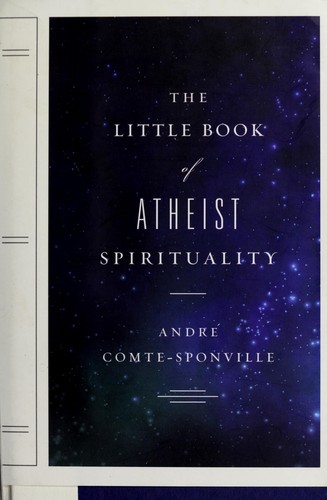
French philosopher André Comte-Sponville argues that people can reject belief in God while retaining spirituality understood as lived contact with truth, nature, love, interior freedom, and the whole. He distinguishes atheism from nihilism, reflects on morality without divine command, and describes experiences of immanence and oceanic unity that require neither supernatural explanation nor membership in a religious institution.
EDITORIAL NOTE
Why it’s in the Library
This book widens the secular shelf beyond critique of religion. It is especially useful for travelers who have lost theological belief but not contemplative depth, wonder, ethical aspiration, or experiences that once carried sacred language. Comte-Sponville offers a philosophically explicit form of atheist spirituality without treating transcendence as a disguised deity. It belongs as one immanent path, not as proof that all spiritual experience is reducible to his interpretation.
Good starting place if…
You do not believe in God but still value contemplation, wonder, love, moral seriousness, or experiences of unity and want a philosophical language for immanent spirituality.
Know before you begin…
The argument reflects a particular French philosophical and secular context and is not a survey of atheist, humanist, Buddhist, Indigenous, or naturalist spiritualities. Comte-Sponville’s reports of mystical immanence are personal and philosophically interpreted; they do not establish a universal psychology or metaphysics. His treatment of religion can be broad, and morality without God has many accounts beyond his own. Readers need not preserve the word spirituality to live an ethically rich secular life.