INNER ATLAS MAP
When what happened no longer fits the way you understood your life.
Meaning-Making
Crystal Park and colleagues · contemporary psychological research
An 8–11 minute walk
Enter the Map ↓01 · BEGIN WITH WHAT HAPPENED
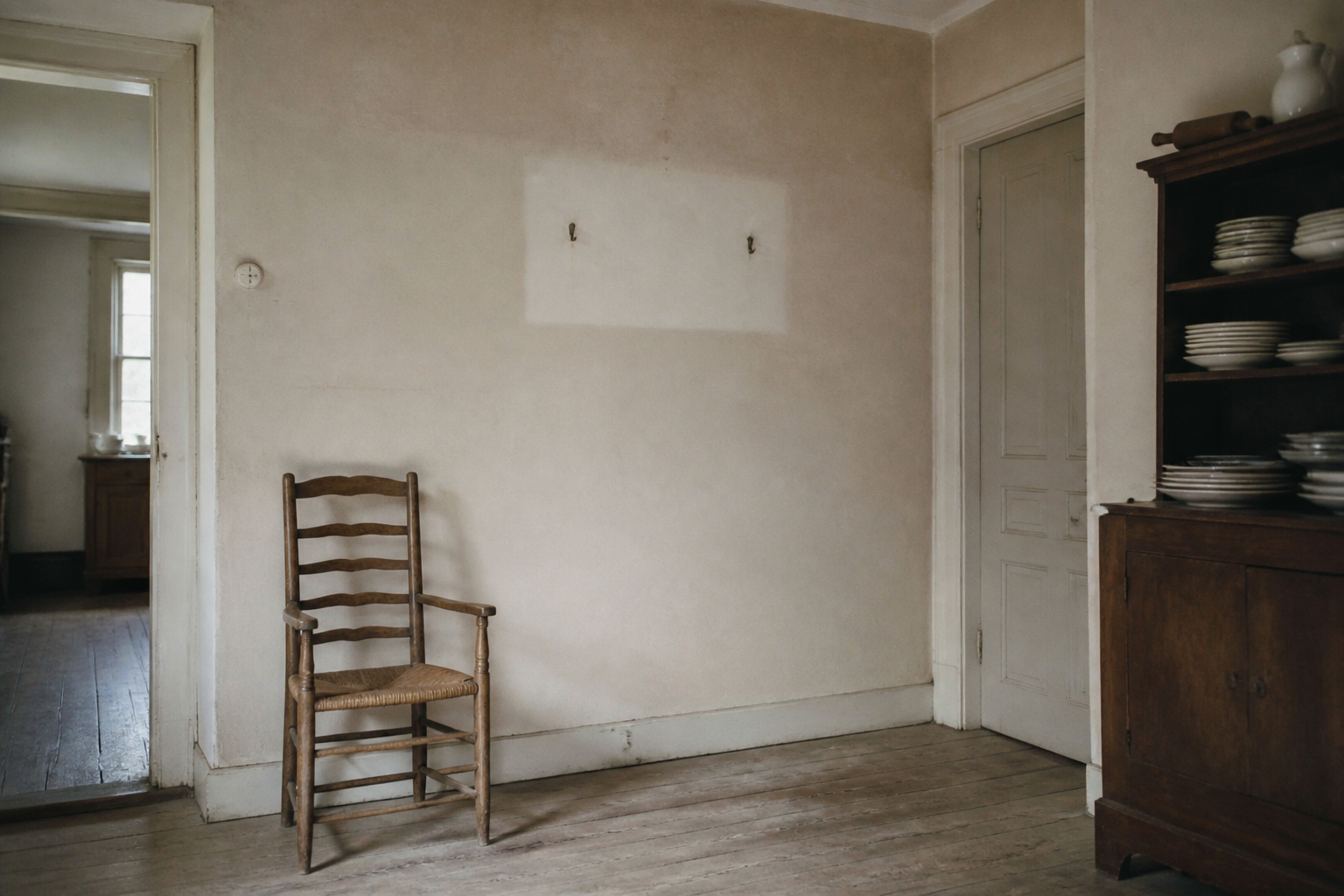
Something happened that Casey’s old understanding could not hold.
Casey had trusted a ministry that shaped much of her adult life. She believed the community protected vulnerable people, imagined a future serving there, and understood some of her own faith and purpose through belonging to it.
Then a leadership failure came to light.
The news was painful in itself. But it also disturbed the larger arrangement around it. What did this mean about the community Casey had trusted? About the good she had experienced there? About her own judgment, faith, relationships, and future?
Sometimes distress comes not only from what happened, but from what no longer fits around it.
Casey is a fictional composite.
STAY HERE FOR A MOMENT
A painful event can become more than one difficult fact.
It can disturb the framework that helped a life make sense.
02 · GIVE THE MISMATCH A HANDLE
Meaning-making research gives Casey’s mismatch a name.
Psychologist Crystal Park’s model distinguishes global meaning—broad beliefs, goals, identity, and sense of purpose—from situational meaning, how we understand a particular event and what it means for our lives.
When the two no longer fit, the discrepancy itself can create distress. Meaning-making describes the different ways people respond: reconsidering the event, revising part of the larger framework, changing goals, searching for significance, or living for a time with what does not fit.
03 · A 2010 INTEGRATIVE MODEL
Park organized a scattered field into four useful distinctions.
Psychologists had studied meaning in coping, religion, trauma, health, and bereavement for years. Park’s 2010 integrative review brought much of that work into one model.
These are broad beliefs about the world and self, valued goals, identity, and a felt sense that life matters.
This is an initial appraisal of what an event is, why it happened, what it threatens, and what can be done.
Their conflict catalyzes reflection, reappraisal, spiritual struggle, goal revision, searching, or narrative work.
Changes that result may include revised belief, altered identity, changed goals, acceptance, or significance.
Go deeper into the research boundary
Park cautions that theory has often outrun the ability to measure outcomes. It seems true that searching more does not always mean adjusting better. The quality and result of meaning-making matter, and some parts of the model have stronger evidence than others.
LET ONE DISTINCTION SETTLE
Searching for meaning
is not the same as finding it.
04 · SEE THE DISCREPANCY
The event and the larger framework meet here.
What I believe · what I value · who I understand myself to be · what future I am moving toward
What I think happened · why it happened · what it threatens · what may still be possible
These are not stages. No response is guaranteed, and “unresolved” is not a failed final step.
05 · RETURN TO CASEY
The mismatch did not leave only one empty space.
The ministry eventually closed. Casey lost more than a weekly place to go. Prayer, work, friendship, belonging, vocation, and an imagined future had all intersected there.
Now several questions remained open at once. Was the good Casey experienced there false? What could still be trusted? What happened to the future she had imagined? Who was she without this place and role? What should happen to anger, loyalty, grief, and responsibility?

WHAT THE MAP MAKES VISIBLE
A belief can be disrupted.
So can a future.
Meaning is carried in goals, identities, relationships, practices, and places—not propositions alone.
06 · ONE TEACHING POINT
There is more than one kind of revision.
Casey might reinterpret the event, revise a belief, change a vocational goal, retain part of the community, leave it, or live with contradictions that do not resolve.
The model can distinguish these responses. It cannot tell Casey which one is right.
PAUSE · PRIVATE · OPTIONAL
What would “enough meaning for now” look likeNo answer is required. Nothing is saved. “I do not know” is a complete response.
without pretending that harm was necessary?
07 · DO NOT TURN MEANING INTO AN ASSIGNMENT
No one owes suffering a redemptive explanation.
A lesson is not required.
Pressure to find a reason, produce growth, or create coherence can add another burden when someone is grieving, traumatized, angry, or unable to make sense of what happened.
Later meaning does not make the event good.
A person may build a meaningful life after harm. That does not make the harm necessary, justified, or beneficial.
Meaning is not only cognitive.
Bodies, rituals, relationships, institutions, safety, and material conditions can carry meaning too. Sometimes changing the situation—or leaving harm—matters more than finding a new way to interpret it.
COME UP FOR AIR
Meaning may be made.
It does not have to be.
You may stop searching, return later, or decline the demand for a coherent answer.
08 · RETURN TO CASEY
The Map can name several losses without deciding what they should mean.
Casey may discover that one belief, one goal, and a sense of identity may need different kinds of attention. Not every loss asks the same thing of her, and they may not resolve at the same pace.
Some parts of the old framework may remain. Others may become difficult to hold. Simply seeing those differences may matter before Casey knows what to do with them.
09 · SPIRITUALITY CAN BE RESOURCE AND STRUGGLE
The same framework can bring both shelter and strain.
Religious meaning may offer language, ritual, relationship, moral orientation, hope, and purpose. It may also intensify struggle when suffering collides with beliefs about God, community, protection, prayer, or vocation.
What once provided meaning may still help, become difficult, or do both at once.
LOOK THROUGH ANOTHER WINDOW
Different Maps notice different parts of disruption.
asks what happens when an event no longer fits our larger beliefs, goals, identity, or sense of purpose.
asks how we tell and retell a life across remembered pasts and imagined futures.
Narrative work can be one form of meaning-making. The two Maps illuminate different parts of the same terrain.
WHAT TO CARRY FROM THIS WALK
Sometimes the mismatch can be named
before it can be resolved.
KEEP, COMPARE, OR SET ASIDE
You are free to put this map down.
It may help name a mismatch you are experiencing. It does not require a redemptive answer, closure, or a final coherent story.